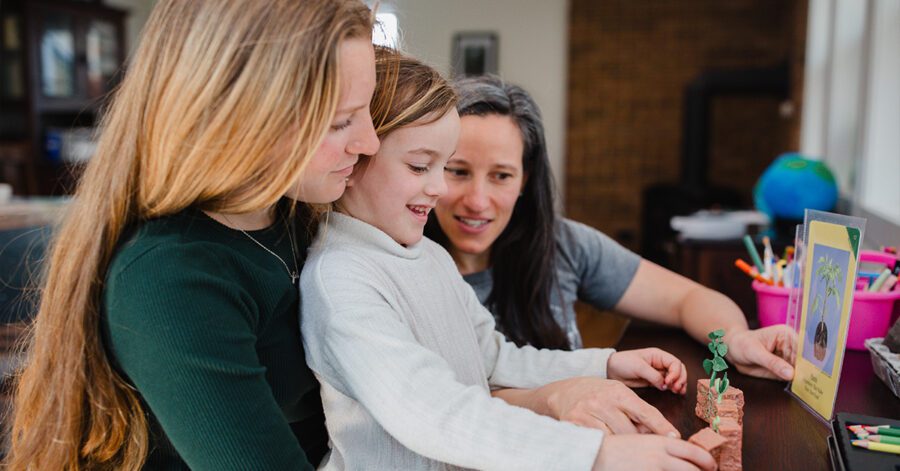
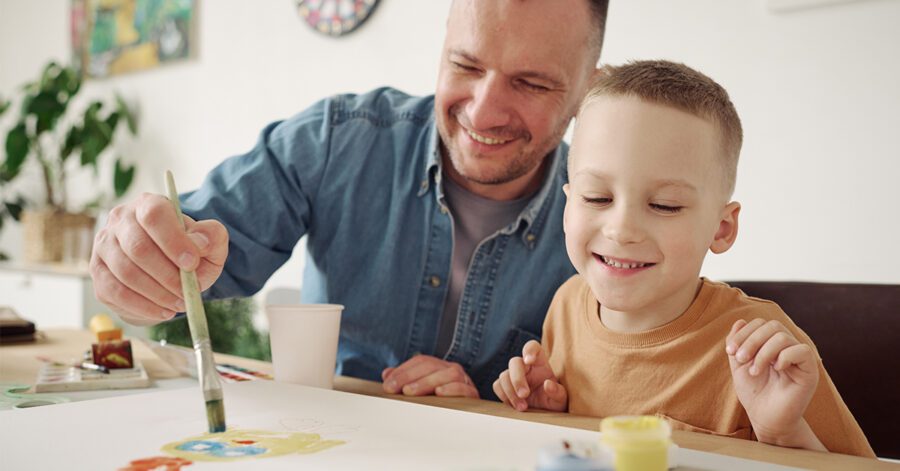
Classical education fine arts doesn’t require you to be an accomplished artist or musician. In Classical Conversations Foundations program, hands-on fine arts introduces your children to beauty, creativity, and wonder through a structured approach that equips even the most non-artistic parents to teach art appreciation and music with confidence.
Many Foundations parents confidently tackle memory work, read-alouds, and math drills, but when Hands-on Fine Arts arises on community day, hesitation may start to creep in.
“Yeah, I’m not an artist.”
“But I don’t play an instrument.”
“Creativity… It’s just not my thing.”
If you’ve ever felt this way, you’re not alone, and believe it or not, you’re more prepared to participate and even lead than you may think.
In Classical Conversations’ Foundations program, the heartbeat of the Hands-on Fine Arts component is not about producing flawless artwork to grace your refrigerator door or a symphony worthy of a concert hall. It’s about cultivating an atmosphere where children can explore beauty, creativity, and the wonder of God’s world.
In fact, this gentle introduction to homeschool art and music lays the very foundations of attending and expressing for your children, skills which are both essential to continued and continual joyful learning for a lifetime.
Why Foundations Fine Arts Is Essential to Classical Education
Part of the Foundations program, Hands-on Fine Arts, is more than an enrichment activity. It is a core part of a well-rounded classical education. When children engage in tactile, creative work, they:
- Develop fine motor skills and hand-eye coordination
- Learn to attend to details often overlooked in daily life
- Grow in patience and perseverance
- Build confidence as they experiment with new materials
- Connect ideas from memory work to visual expression
When they engage with an instrument or participate in active listening, they:
- Improve attention and focus
- Increase vocabulary through naming
- Begin to recognize forms and patterns
- Strengthen memory skills
- Practice self-control and appropriate response
The Four Parts of Hands-on Fine Arts on Community Day
Drawing
Over the course of each cycle, Foundations students explore the arts by rotating through four different topics of study. During the first six weeks, they are introduced to and practice the five elements of shape (also known by the acronym OiLS): circles, dots, straight lines, angled lines, and curved lines. They consider concepts such as mirror images, upside-down images, and perspective, and they create their own artwork integrating these ideas.
Music Theory
During the second six weeks of first semester, pencils are traded for tin whistles, and students are exposed to the earliest elements of music theory, such as note value, dynamics, and rhythm. This classical music education component teaches students to practice handling a simple instrument and learning the grammar of that instrument, while humbling themselves to practice diligently to produce a melody alongside their friends, taking joy in making music together.
Great Artists
After winter break, students begin their fine arts homeschool activities by imitating the style of great master artists and learning vocabulary associated with art. This picture study approach introduces students to eighteen master artists over the course of three cycles of Foundations. Additionally, he or she will have sculpted, painted, and drawn using the styles of each, learning the vocabulary associated with each art form, and delighting in the process of imitation and creation.
Great Composers
The last six weeks of each cycle is spent in quiet restfulness as students practice the lost art of active listening. This composer study segment allows students to explore the music of composers from different periods, attending using the vocabulary reinforced earlier in the year. Keeping bodies still and minds engaged can be a difficult process for many adults, much less for children. Through training focused thinking and concentration, our students can more deeply appreciate and engage with the creative expression of others.
In a culture filled with screens and passive entertainment, hands-on learning is a refreshing return to meaningful, personal engagement. Just as with Hands-on Science, Hands-on Fine Arts encourages students to slow down, pay attention, and appreciate the wonder woven into each thread of God’s creation.
Read the 6 Best Tips for Foundations with Your Youngest Learners
Hands-on Fine Arts for Non-Artistic Parents
One of the biggest myths among homeschool parents is the belief that only “artsy” or “musical” people can model fine arts on community day well. The truth? Classical Conversations equips parents to learn alongside their children. Your willingness to try is far more important than your innate artistic or musical ability.
When your child sees you pick up a paintbrush, try a new technique, toot a tin whistle, or laugh at your own mistakes, you model powerful lessons:
- Learning is lifelong.
- Trying something new strengthens character.
- Beauty is worth pursuing, even when the process is messy.
This is the heart of the Classical Conversations homeschool community: parents and students growing together.
Read about Sacred Creativity in Classical Education: Finding God in Art
Process Over Product: Teaching Hands-on Fine Arts Classically
One of the beautiful aspects of the Hands-on Fine Arts component of the Foundations curriculum is its emphasis on process, not perfection. Through thirty minutes each community day, children begin to learn that creating something meaningful takes time and effort. Not every creation, tactile or auditory, will match the vision in their minds, and that’s okay.
These moments provide students with the opportunity to practice:
- Resilience
- Personal expression
- Creative problem-solving
- The joy of disciplined practice
These are skills that extend far beyond community day, shaping their entire educational journey.
Building on Classical Fine Arts Curriculum at Home
As a Foundations parent, you can build on the homeschool art lessons and music appreciation homeschool experience by creating an atmosphere that values attentiveness, creativity, and joyful practice rather than performance or perfection.
Art in Daily Life
Begin by making space for art and music in daily life. Keep simple supplies (paper, pencils, paints, or clay) easily accessible, and invite your children to create freely. Display their work at eye level to affirm that their efforts are worth noticing. For music, play a wide variety of quality recordings at home, and allow listening to become a normal, quiet part of the day rather than background noise.
Practice Together
You can also practice alongside your children. Whether sketching shapes together, tapping rhythms, or learning a simple melody, shared participation communicates that learning is a lifelong pursuit to be enjoyed. This shared effort reinforces humility, perseverance, and delight in the process, and values emphasized within teaching art appreciation in homeschool settings.
Practice Attending
Another way to build continuity is by reinforcing vocabulary and habits of attention. Ask your children to describe what they notice in a piece of music or artwork using the terms they are learning. Encourage stillness during listening times, helping them practice focused attending in a gentle, age-appropriate way. This art and music integration strengthens their ability to attend and express across all subjects.
Connect Art to Faith
Finally, you can connect art and music to faith and gratitude by pointing out how creativity reflects God’s character. Celebrate beauty in nature, architecture, and sound, reminding your children that art is one way we respond to the wonder of God’s creation. Through these simple, intentional practices, you extend the community day experience into the rhythms of home, nurturing a deeper love for truth, goodness, and beauty.
Listen to Outside the Museum: Fine Arts at Home on the Everyday Educator podcast
Crafting a Culture of Beauty Through Homeschool Music Curriculum
When you participate in Hands-on Fine Arts each week, you’re doing more than fulfilling a curriculum requirement. You are crafting a culture of beauty, and your homeschool becomes richer when it is not rushed but welcomed. Celebrate the messy hands that lead to the mastery of techniques.
Rejoice in the surprising outcomes that lend themselves to beautiful moments. Champion your children’s courageous attempts and resilient spirit to try, try once again. Delight in the conversations sparked in your home as you explore the creative expression of others, both past and present, through great works of art, homeschool study, and music appreciation.
Read about Finding God in Music: A Classical Homeschool Music Curriculum Approach
Frequently Asked Questions About Classical Education Fine Arts
What are the four parts of fine arts?
In Classical Conversations Foundations, the four parts of fine arts rotate throughout each 24-week cycle: drawing and shape study (weeks 1–6), music theory and tin whistle (weeks 7–12), artist study and imitation (weeks 13–18), and composer study and active listening (weeks 19–24). This rotation ensures students experience the full breadth of classical fine arts curriculum each year.
How do you teach fine arts classically?
Teaching fine arts classically emphasizes imitation, vocabulary building, and attentive observation before moving to creative expression. In Foundations, students first learn the grammar of art (elements of shape, color theory, musical notation) and then imitate great masters before creating their own work. This approach, similar to Charlotte Mason picture study methods, trains children to attend carefully, name what they see and hear, and respond with growing skill and confidence.
Do I need to be artistic to teach fine arts?
No. The Foundations program equips parents to teach art appreciation for kids and music appreciation homeschool lessons without prior artistic training. The curriculum provides clear instructions, vocabulary, and activities that allow you to learn alongside your children. Your willingness to try and model lifelong learning matters far more than innate talent. Classical Conversations provides the framework; you provide the enthusiasm and presence.
What is picture study?
Picture study is a method of art appreciation for kids where students observe a work of art carefully for several minutes, then describe what they remember without looking at the image. This practice trains attention, memory, and descriptive vocabulary. In Foundations, picture study homeschool activities introduce students to great works of art from master artists across three cycles, building familiarity with artistic styles, techniques, and the language of visual expression.
How long is fine arts in Foundations?
Fine arts in Foundations meets for approximately 30 minutes during each community day. Over the course of a 24-week cycle, students experience all four components of the fine arts rotation: drawing and shape study, music theory and tin whistle, artist study, and composer study. This consistent weekly rhythm allows children to build skills gradually while developing a lifelong appreciation for beauty.
Find the Foundations Fifth Edition, English Language Curriculum at the CC Bookstore
Lean in, enjoy the process, and let Hands-on Fine Arts become a joyful part of your family’s weekly rhythm. Wonder is waiting to meet you there.
Check out all the parts of a Foundations Community Day with these resources:
- From Root to Fruit: Cultivating Growth in Foundations with New Grammar
- Training Voices for Truth: Why Presentations Matter in Foundations
- How to Teach Hands-On Science in Classical Conversations Foundations
- Foundations Memory Work Review: How to Master Grammar Review at Home and in Community
Written by: