What do Classical Conversations reviews actually reveal about this homeschool program? After analyzing 3,900+ verified reviews from 2,300+ communities nationwide, we discovered something remarkable: families consistently praise how CC solves their three biggest homeschool challenges—curriculum overwhelm, isolation, and the constant worry that they’re not doing enough. With a 4.97 out of 5.0 average rating and 93% positive reviews, these Classical Conversations reviews show why families stay for 10+ years and what their graduates actually achieve.
Here’s what real families say about their experience—the good, the challenging, and whether it’s worth it.
TL;DR: Key Findings
- 4.97/5.0 stars across 3,900+ verified reviews from 2,300 communities
- 93% positive review rate with consistent ratings across all 50 states
- Three success factors cited repeatedly: classical method effectiveness, Christian worldview integration, and community support
- 50+ families in our sample have stayed 10+ years, many with graduated students
- Primary challenge: Requires serious parent involvement—this isn’t a drop-off program
Review Methodology
We analyzed 3,900+ verified Google Business reviews from 2,300 Classical Conversations communities nationwide, spanning urban, suburban, and rural locations across all 50 states. Reviews were filtered for verified participants with detailed experience reports. Data collected: September-November 2024.
Classical Conversations Reviews at a Glance
Classical Conversations serves 50,000+ children from age 4 through high school with a unique model: one community day per week combined with home education four days per week. The program operates in all 50 states plus international communities, following a structured curriculum from Foundations (elementary) through Challenge IV (12th grade).
Unlike traditional co-ops: CC provides national curriculum consistency, required parent training, and a deliberate classical methodology—not just social enrichment.
The Numbers That Matter
| Metric | Rating/Number |
| Overall Average Rating | 4.97/5.0 stars |
| Total Families Served | 50,000+ |
| Communities Nationwide | 2,300+ |
| Verified Reviews Analyzed | 3,900+ |
| Positive Review Rate | 93% |
| Families with 10+ Years | 50+ (in review sample) |
Top-Rated Communities:
- Minnesota: 135 reviews, 4.98★
- Northeast Georgia: 147 reviews, 4.99★
- Kansas: 115 reviews, 4.98★
- North Alabama: 124 reviews, 4.99★
- Wisconsin: 114 reviews, 4.98★
What Parents Say: The 3 Main Themes
#1: The Classical Method Works—If You Trust the Process
The classical education method divides learning into three stages: grammar (memorization and foundation), dialectic (critical thinking), and rhetoric (articulation and persuasion). Parents consistently report long-term results, even when early years feel repetitive.
“My children look forward to every single week, and dread the summer solely because we are on break from CC. The memory work taught through songs creates ‘sticky learning’—information that stays with them for years.”
—Kristen A. 8-year CC parent, Central Indiana
Early Years (Ages 4-12): The grammar stage focuses on absorbing vast amounts of information across history, science, math, Latin, and geography through songs and repetition—without pressure to analyze yet.
Middle Years (Ages 10-14): As children enter the dialectic stage, parents see the foundation pay off. Formal logic, persuasive writing, and research skills develop as students question and connect concepts across subjects.
“I could not homeschool in high school without Classical Conversations! So thankful for our community that keeps us accountable and gives us a place to have meaningful conversations about the books we are reading.”
—Mandy P., Kansas
High School (Ages 14-18): The rhetoric stage produces confident communicators who articulate complex ideas through Socratic discussion, formal debate, and research papers.
“Classical Conversations doesn’t just force memorization. It teaches you to think and ask questions so that you can continue learning even outside of school.”
—Brayden B. CC graduate, Michigan
The proof: Over 50 families in our review sample have stayed 10+ years, with multiple graduated students now succeeding in college and careers. Communities consistently maintain 4.95+ ratings across all program levels from Foundations through Challenge IV.
#2: Christian Worldview Integration—Every Subject Points to God
Is Classical Conversations religious? Yes, explicitly. The program integrates biblical worldview across all subjects—not as separate Bible study but woven throughout history, science, literature, math, and fine arts.
This isn’t supplemental. It’s foundational.
History is taught from a Christian historical perspective, acknowledging God’s hand in world events. Science explores “knowing God through His creation.” Literature is analyzed through moral and theological themes. Even math and logic connect to God’s order and design.
The data confirms this priority:
- Mission statement “To Know God and Make Him Known” appears in 47% of positive reviews
- “Biblical worldview” cited in 52% of 5-star reviews
- “Christian community” mentioned in 68% of reviews
“I appreciate the biblical worldview in all the subjects and the wonderful community of like-minded families to raise and educate our children together.”
—Mindy B., Illinois
“My children are entering life ready to think for themselves. They are confident, focused people who take the statute ‘to know God and to make Him known’ to heart and build their lives around Him.”
—Christa W., Kentucky
Multiple families report their children’s faith growth equals or exceeds their academic growth—an outcome they consider the program’s greatest success.
#3: Community Support—”These Are Our People”
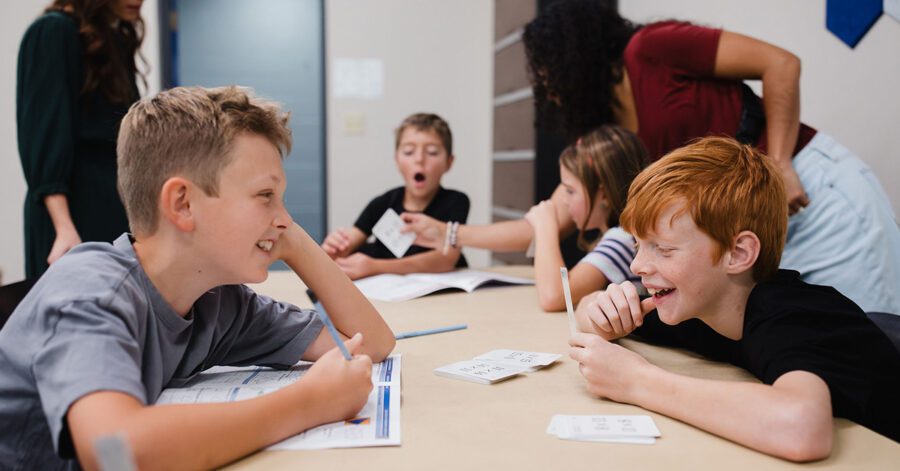
What is Classical Conversations community day? A once-weekly gathering (typically 3-4 hours) where families come together for group learning. Children participate in presentations, science experiments, art projects, and collaborative activities. Parents serve as trained tutors, creating an environment where both children and adults learn together.
But reviews reveal community day represents something deeper than logistics.
“CC has brought us to ‘our people.’ A supportive, fun, and like-minded community to learn and grow together with!”
—Amanda H., Minnesota
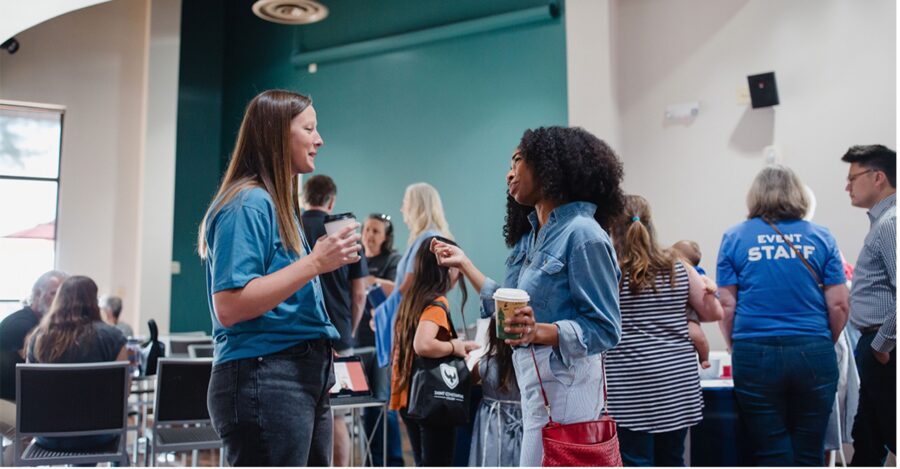
The phrase “our people” appears repeatedly—capturing what parents value most: finding families who share their educational philosophy, faith commitment, and willingness to pursue something countercultural.
Why community matters so much:
Accountability keeps families on track. Homeschooling can feel isolating. The weekly commitment to community day provides structure and momentum.
“The community aspect is unmatched. We love CC!”
—Kelli W., Oklahoma
Parents learn alongside children. The CC model assumes parents don’t need prior expertise—just willingness to learn. Practicums train parents in both method and curriculum.
“Not only are my kids getting an excellent education, but my husband and I are redeeming our own education as well!”
—Megan B., Indiana
Community provides support during difficult seasons. When life gets hard—illness, family crisis, new babies, job changes—the structure and community carry families through.
“I’m in a hard season of life right now, and I can’t pour 100% into his homeschool journey. But that’s okay! With Classical Conversations, all of my shortfalls and gaps are beautifully filled in by the way the curriculum is designed.”
—Steph M., Kansas
The data confirms community’s central role: “Community” is mentioned 3.2 times more often than “curriculum” alone in positive reviews. Multiple reviews cite “lifelong friendships” formed through years of learning together.
Classical Conversations Pros and Cons: The Honest Assessment
What Families Love Most
- Clear K-12 Path Eliminates Curriculum Overwhelm
“Classical Conversations has helped me have a clear path for homeschooling my children through High School graduation.”
—Gail P., Minnesota
Parents no longer face researching and purchasing different curricula each year. The program provides continuity from Foundations through Challenge IV, with each stage building systematically on the previous one.
- Built-in Community and Accountability
“The support from other homeschool families is one of the biggest blessings.”
—Dawn B., Michigan
Isolated homeschooling often leads to burnout and doubt. CC creates natural accountability through weekly community day and relationships with families pursuing the same goals.
- Parent Training Equips You for Success
Classical Conversations provides Practicum training showing parents not just what to teach but how to teach it. Parents consistently report feeling equipped rather than abandoned.
- Classical Method Develops Transferable Skills
“Skills for life not just school.”
—Holly S., Kansas
The classical model develops critical thinking, logical reasoning, persuasive communication, and independent learning—skills that transfer beyond academics.
- Multi-Age Learning Keeps Families Together
“I love that CC has helped all of us to learn together through the lens of a Christian worldview.”
—Whitney A,, Tennessee
Everyone learns the same history, science, and geography content at age-appropriate depths. Parents aren’t dividing time between multiple curricula for different ages.
The Real Challenges
- This Requires Serious Parent Involvement—And Not Every Family Can Sustain It
“(CC) is hard and rigorous. It is a LOT. BUT, it. is. worth. it.”
—Rebekah H., Georgia
Classical Conversations demands significant effort from both parents and students. Memory work requires daily practice. Challenge-level reading loads are substantial. This isn’t a drop-off enrichment program.
Parents sometimes expect CC to function like traditional school. Instead, community day introduces concepts, but parents guide learning at home four days per week.
“CC says that we, the parents, are the teachers.”
—Sally F., Indiana
How families overcome this: The support system makes the difference. Parents who commit to learning alongside their children, attend Practicums with open minds, and lean on community during difficult seasons consistently report challenges become manageable.
- Investment Required—Time and Financial Commitment
Multiple parents mention financial considerations (tuition varies by community and program level, plus curriculum materials and Practicum fees). The time investment extends beyond the obvious: parents attend training, prepare for community day, and actively teach at home.
The long-term perspective:
“If you’re looking for the perfect blend of academic rigor, room for individualization, community support for parents and social connections for kids, this is for you! Worth every penny!”
—Elizabeth B., Indiana
“We have been a part of a Classical Conversations community for 10 years, and we still love it!”
—Kyra W., North Dakotas
Families who’ve completed multiple years consistently view it as investment rather than expense, comparing it not to curriculum materials but to educational outcomes and community relationships they couldn’t replicate independently.
- Classical Method Has a Learning Curve
“Though the classical way of teaching is so different, it has been so worth the wrestling required to understand and utilize it.”
—Megan R., Missouri
Parents educated in conventional systems sometimes struggle to embrace memory work before understanding, Socratic discussion instead of lectures, or the slower pace of mastery-based learning. Trusting the process when it looks nothing like your own education requires faith and patience.
The consistent pattern: Families who embrace rather than resist the classical model, who view rigor as investment rather than burden, and who engage fully with community find that challenges transform into the very elements that make CC work.
What Graduates Say: College and Career Outcomes
The ultimate test of any educational program is what happens after graduation. CC graduates consistently report feeling over-prepared for college academics and uniquely equipped with skills their peers lack.
Academic Preparation Beyond Expectations
“I felt fully prepared for every challenge and assignment that came my way. Even now, as a college graduate working in my career field, I continue to use so many of the skills I first learned through Classical Conversations.”
—Isabelle V., Kentucky
“I learned more through this school than anything in college and still rely on what I learned there to this day!”
—Madalyn G., Minnesota
Skills That Set Graduates Apart
“Now, as a college student and business owner, I can very appropriately say that CC has prepared me well in my faith, academics, AND vocational interests—three subjects that I don’t often see from other students at my university.”
—Asher S. CC graduate, Kansas
“My oldest graduated in 2021, and still today tells me how much better equipped she is for thinking logically and spotting faulty reasoning, handling pressure-filled situations, speaking in public, and many other real life scenarios.”
—Carrie P., Minnesota
The Consistent Graduate Pattern
Five themes appear repeatedly in graduate testimonials:
- Critical thinking skills—ability to analyze arguments and construct well-reasoned positions
- Public speaking confidence—comfortable presenting in any setting
- Respectful debate skills—engaging intellectually in college and workplace
- Strong work ethic—developed through managing significant academic loads
- Faith integration—bringing biblical worldview to all areas of life
Classical Conversations vs. Other Options
How CC Differs from Traditional Co-ops
Six key differentiators:
- National consistency—Same curriculum structure across 2,300+ communities
- K-12 continuity—Clear path from Foundations through Challenge IV
- Required parent training—Directors and tutors complete Practicum training
- Classical methodology—Deliberate progression through grammar, dialectic, rhetoric
- Explicit Christian worldview—Biblical perspective across all subjects
- Long-term commitment culture—50+ families in review sample with 10+ years
“It is highly intellectual yet realistically doable, rich in content yet never wasteful of time. CC has already built the bridges.”
—Julie S., Missouri
CC vs. Independent Homeschooling
“I was homeschooled and always wanted to homeschool. My mom used a very eclectic style and switched curriculum often. It worked, but the thought of having to make all those decisions and trying to find good curriculum that worked was overwhelming for me. So, when I found CC I was hooked.”
—Jerilynn B., Ohio
Classical Conversations eliminates curriculum selection stress, provides accountability, prevents isolation, and offers parent training—elements individual homeschooling requires parents to build themselves.
What About Relocating?
“13th year of homeschooling with Classical Conversations. Seamless international move due to uniform curriculum, all 4 communities extended love to our kiddos.”
—Leanne S., Arkansas
With communities nationwide and international presence, families can typically find a CC community in their new location. Because curriculum is consistent across all communities, children continue exactly where they left off.
Common Questions About Classical Conversations
How old does my child need to be?
Children can start CC Foundations at age 4 and continue through Challenge IV (12th grade). The multi-age design means siblings ages 4-18 learn together, with depth adjusted for developmental stages.
How much time does Classical Conversations require?
- Community day: One day per week (4-7 hours)
- Foundations (ages 4-12): 1-2 hours daily at home for memory work and assignments
- Essentials (typically 4th-6th grade): Add ~1 hour daily for writing and grammar
- Challenge (7th-12th grade): 3-4 hours daily with increasing student independence
Parents should expect to invest time not just in teaching but in Practicum training and curriculum preparation.
What if I didn’t have a classical education myself?
This concern appears repeatedly, and parents offer consistent encouragement:
“I knew nothing about the classical method when I started, but I was never made to feel inadequate. Instead, I learned that I am the perfect person to teach my children.”
—Julie S., Missouri
CC provides Practicum training specifically to equip parents regardless of educational background. You don’t need expertise—just willingness to learn alongside your children.
How much does Classical Conversations cost?
Tuition varies by community, program level, and location. Additional costs include curriculum materials and Practicum fees. Contact your local community for current pricing.
Many communities offer payment plans and some have financial assistance available. Find your local community for specific information.
Your Next Step: Spring Enrollment Timeline
Communities fill enrollment between March and May. If you’re serious about Classical Conversations for the fall, here’s your action plan:
January-February: Research and Attend Info Meetings
Find your local community at Classical Conversations Community Search. Most communities offer multiple information sessions in late winter/spring.
Come with questions:
- What’s the weekly time commitment for my children’s ages?
- What’s the total annual cost including tuition, materials, and training?
- What does a typical community day look like?
- Can I observe a community day before enrolling?
February-March: Complete Required Practicum Training
Register early—spring Practicums fill quickly. You’ll need training for the programs your children will attend:
- Foundations Practicum for elementary ages
- Essentials Practicum for writing/grammar program (4th-6th grade)
- Challenge Practicum for junior high/high school
March-May: Enrollment Opens
Don’t wait. Many communities reach capacity by early spring. You’ll complete:
- Community enrollment forms
- Statement of Faith affirmation
- Emergency contact information
Communities provide curriculum lists once enrollment is confirmed.
What First-Year Families Experience
“This is our first year at CC and we absolutely love it!”
—Bianca S, Texas
“This is our first year of homeschooling, and we couldn’t be more pleased!”
—Kaity S., Minnesota
Quick wins new families report:
- Children begin memorizing through songs immediately
- Community day becomes the favorite day of the week
- Clear structure reduces “Am I doing enough?” anxiety
- Finding “your people” makes homeschooling sustainable
Veteran advice to newcomers: Give it at least one full year. The first semester can feel unfamiliar, but by spring, families report the rhythm clicks and benefits become clear.
What 50,000+ Families Know
After analyzing nearly 4,000 verified reviews, three themes emerge with remarkable consistency:
- The classical method works—especially when families trust the process.
Parents who commit to the full program (often 10+ years) report graduate outcomes exceeding expectations. The early years can feel repetitive, but families who stay consistently report that around year 4-5, they see connections forming. By high school, their children demonstrate critical thinking, communication, and independent learning skills that transfer directly to college and career success.
- Christian worldview integration matters—not as add-on, but as foundation.
Families specifically choose CC because faith formation and academic excellence happen simultaneously. The mission “To Know God and Make Him Known” isn’t marketing—it’s lived reality in 2,300+ communities nationwide. This integration produces graduates who don’t compartmentalize life into sacred and secular categories.
- Community support is the secret ingredient—perhaps more than curriculum itself.
The phrase “these are our people” appears in hundreds of reviews. Statistics confirm: “community” is mentioned 3.2 times more often than “curriculum” alone. Community transforms homeschooling from lonely and overwhelming to supported and sustainable.
What Sets Classical Conversations Apart
With 50,000+ families enrolled and 4.97/5.0 average rating across reviewed communities, CC demonstrates unusual consistency in homeschool education. The program’s strength lies not in any single element but in how structure, methodology, training, and community work together.
Is it perfect? No. CC requires significant parent involvement, financial investment, and long-term commitment. The rigor is real. Some seasons feel overwhelming.
But according to thousands of families who’ve completed the journey—many now with graduates in college and careers—it’s worth it.
“Some of my younger kids started right at 4 years old and my oldest joined when he was 11. I would encourage any Christian homeschool family to stop by a community and see if it’s right for you!”
—Minnesota parent, 14 years with CC
The Real Question Isn’t Whether CC Works
The consistent testimony from 3,900+ reviews: it works when you work it.
The method is proven. The community is real. The outcomes speak for themselves.
The question is whether you’re ready to commit to the journey.
If you are, take action now:
- Find your local community and contact the director this week
- Attend an information meeting to ask hard questions
- Register for Spring/Summer Practicum as soon as enrollment opens
- Make your enrollment decision by March before communities fill
The families who wrote these reviews started exactly where you are now—wondering if Classical Conversations could work for their family, questioning if they had what it takes, hoping for a sustainable homeschool solution.
Their answer after years of experience: Yes. It can work. You do have what it takes. And you don’t have to do it alone.