Your wife has maybe thrown around some concepts and terms that you don’t understand. You have a different set of what classical educators call “grammar.” It might feel like explaining the intricacies of the 3-4 defense vs. the 4-3 defense to someone who’s never watched football before, and this is perfectly natural. However, you are in it together, so let me explain the definition of ‘classical education’ in plain English.
Based on Science
The brain develops different areas at different times in a person’s life.
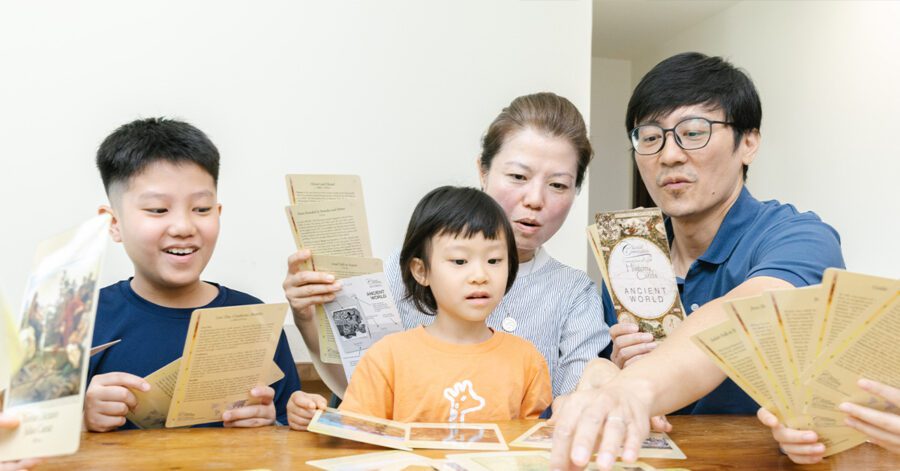
The ancients knew this without the use of MRIs or CAT scans or modern technology. Classical education is just using the techniques of teaching the right way at the right time with timeless materials (like that movie you’ve seen fifty times). Classical education methods are how most things—including sports—are taught: practice the basics and learn the fundamentals, put the students into scrimmages, then put the students into games.
Classical education calls these steps the “grammar” (basics and fundamentals), the “dialectic” (scrimmage), and the “rhetoric” (games) stages. The Bible refers to these as knowledge, understanding, and wisdom.
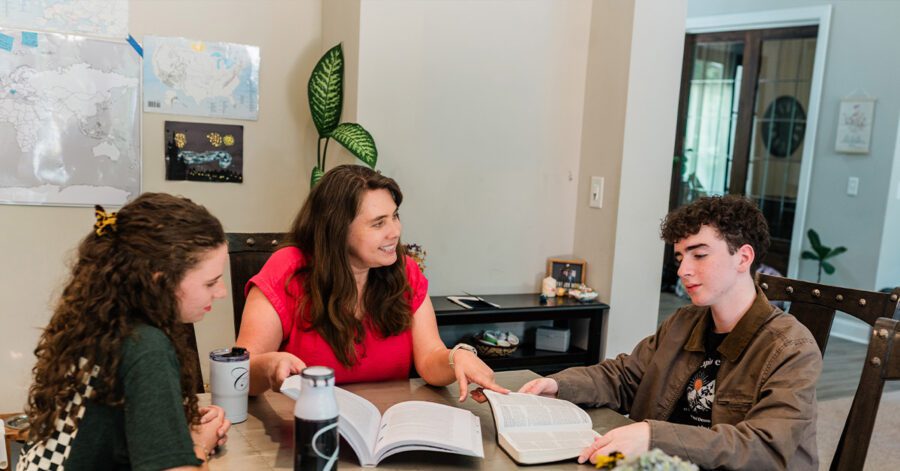
The great thing about classical education is that anyone can teach this way; you don’t need a teaching degree (and we have a couple of books to help your wife). You just need to follow a simple process of having your child memorize (grammar), ask good questions (dialectic), and explain things back to you (rhetoric).
Reading Original Documents
Part of classical education is reading source materials, not someone’s interpretation of them.
Your student will read the actual U.S. Constitution, some of the Federalist Papers, and the “I Have a Dream” speech, not some historian’s view of those documents. Your student will read the classic books, not a synopsis of them.
What a Classical Education is All About
A classical education is centered around the idea of loving to learn and searching out truth, beauty, and goodness.
Beauty not as in, “I’ve got a hot wife,” but as in seeing how God is reflected in what He made. Truth is absolute and can be known. Goodness in Christian education is about being godly.
The CiRCE Institute says this about the difference between classical and modern education:
“We teach differently because we have a different perspective on the Child. We don’t believe that a child is a fortuitous blob of protoplasm waiting to be decomposed. We believe that she is nothing less than the Divine Image, an icon of the invisible God. She must not, therefore, be taught following techniques developed to instruct beasts. She must not be reduced to mere chemical responses to electrical stimuli. She must be taught personally, in relationship.
We teach different things because we have loftier goals for the child. We govern differently because we have a more serious perception of our task. We assess our work differently because we have higher standards. We confront the challenge of communication because we don’t conform to the spirit of the age.”
Andrew Kern, president of CiRCE, summarized it best, “Children are souls to be nurtured, not products to be measured.”
A classical education is teaching your child to be free and to use that freedom to make wise choices. They will eventually move out of your house. You want them to make wise decisions. A classical education is for everyone.
This post is an excerpt from A Dad’s Guide to Classical Education, the free ebook by Classical Conversations CEO Robert Bortins. It’s a short, easy-to-read summary on the definition of ‘classical education’ and everything homeschooling dads need to know.