Cycle 3 Foundations Hands-On Science gives students twenty-four weeks to explore three of God’s great mysteries: the design of the human body, the hidden order of chemistry, and the mathematical patterns that govern what looks like chance. Amy Jones, a long-time Classical Conversations parent and Curriculum Developer for Classical Conversations Multimedia, guides readers through each component of the curriculum and the Five Core Habits of Grammar students practice along the way.
In this article, she walks through the full arc of the academic year, from anatomy models and chemical reactions to dice rolls and probability charts, alongside the questions each unit invites students to ask.
How to See Science Through a Classical Lens
Is life just a roll of the dice? Does life only consist of what we can see or touch? Or is life a purposeful and orchestrated journey led by a loving, wise, and powerful Creator who fills His world with mysteries — both seen and unseen? You might expect these questions to be asked during a sermon or, perhaps, during a discussion in a philosophy class. Would it surprise you that these questions are explored during Foundations Hands-on Science?
In Cycle 3 Foundations Hands-on Science, students consider three key concepts of God’s manifold creation: His intricate design of the human body, His invisible world of chemistry, and His boundless variations of mathematical patterns. As students engage with experiments, demonstrations, and hands-on projects, they grow in their understanding of a Creator God who has purposefully and intentionally created both a seen and an unseen world; a world designed to reveal His nature and His power.
As students begin to build their science knowledge, they practice the classical skills of the Five Core Habits of Grammar (Naming, Attending, Memorizing, Expressing, and Storytelling). For twenty-four weeks, students are introduced to the wonders of God’s visible and invisible world.
Can Studying Human Anatomy Lead to God’s Design? (Weeks 1-12)
During the first twelve weeks, students study the beautiful design of the human body: how man is fearfully and wonderfully made. Since anatomy naturally lends itself to hands-on experience, students are captivated as they discover the body’s capabilities. For instance, students experience how much air their lungs can hold, how their ears locate sound, the different ways their skin senses touch, and how God perfectly created their eyes to see. The core habit of Attending is naturally practiced as students use their eyes, ears, noses, and fingers to learn about God’s intricate design.
Students continue their study of the human anatomy by creating a display of God’s engineering! Together, students cut, paste, color, and assemble their own model of the human body. As they build, students learn the names of the major body systems and recall science memory work facts. By practicing the Core Habit of Naming, students develop a vocabulary for both the major systems and for minor elements of the human body.
If you are listening in during Hands-on Science, you’ll hear words like femur, trachea, esophagus, tendon, and spinal cord from the youngest abecedarians to the oldest masters!
As students participate in Hands-on Science, they are also memorizing science facts about the body during the Grammar component of their Foundations day. Both the anatomy hands-on science activities and the science memory work provide rich opportunities to deepen students’ appreciation of God’s design of the human body. They can declare with the psalmist, “We are indeed fearfully and wonderfully made!”
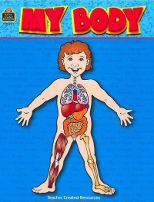
Make a human body model with the My Body book
Does Chemistry Point to God’s Unseen Creation? (Weeks 13-18)
During the second twelve weeks, students delve into two worlds: the invisible world of chemistry and the visible world of probability. Both components draw students into a deeper exploration of God’s perfect designs. Students experience how chemistry reveals the unseen order and predictability by observing chemical reactions. In the last six weeks, students learned how probability reveals the mathematical concepts that can predict seemingly random events.
For weeks 13-18, students plunge into the mysteries of God’s unseen world of chemistry! Exploring chemistry through hands-on demonstrations helps students practice evaluating and predicting outcomes and identifying causes and effects. During this component, students determine which chemical makes an egg “magically” float in water, solve the mystery of disappearing liquids, and uncover which secret chemicals change hard water into soft.
While students are exploring these unseen marvels, they are also memorizing facts about the unseen world of atoms and elements during the Grammar component of Foundations. By practicing the Core Habit of Memorizing, students can recall the parts of an atom, the first twelve elements of the Periodic table, and the definition of an acid and a base. With both hands and minds engaged, students find delight in uncovering God’s unseen mysteries.
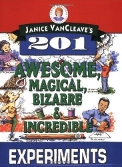
Recreate community experiments at home with 201 Awesome, Magical, Bizarre, & Incredible Experiments
How Can Patterns and Probability Unveil God’s Order? (Weeks 19-24)
Weeks 19-24 culminate the celebration of discovery! While students are memorizing the different theories of Origins in the Foundations Grammar component, they are also investigating the mathematical patterns of probability during Hands-on Science. This combination of exploring man’s attempts to explain the beginning of Creation with learning to recognize patterns that lead to predictable outcomes allows for rich conversations about God’s intentional design of His world.
During these last six weeks of Hands-on Science, students answer the question, “Could this have happened by chance?” As they work through each probability activity, students soon determine that no event is haphazard. Instead, they discover that mathematical calculations can help them make reasonable predictions. Of course, all this is done with lots of fun! Dice rolls, coin tosses, and predicting pizza combos make up this unit’s activities. There’s even an adventure with Bigfoot!
Students learn how to chart data, determine outcomes, find the mean, median, and mode, and calculate odds. The core habits of Naming and Expressing are practiced as students develop a “probability” vocabulary and express their ideas with charts and graphs. After calculating outcomes and discovering the patterns of probability, students celebrate God’s multifaceted world that is filled with beautiful variations.
Learn more about Homeschool Science: Data Collection & Analysis
Frequently Asked Questions
What does CC Cycle 3 Foundations Hands-On Science cover?
Cycle 3 Foundations Hands-On Science covers three areas over twenty-four weeks: human anatomy (weeks 1-12), chemistry (weeks 13-18), and probability and mathematical patterns (weeks 19-24). Each component connects scientific exploration to a Christian worldview and the classical skills of the Five Core Habits of Grammar.
What are some examples of hands-on science activities for homeschoolers in Cycle 3?
Activities in Cycle 3 include measuring lung capacity and assembling a human body model during the anatomy unit, performing chemistry demonstrations (such as making an egg float or observing chemical reactions) during the chemistry unit, and working through probability exercises with dice, coin tosses, and data charts during the probability unit.
How does Classical Conversations Foundations science connect to memory work?
In the Foundations program, Hands-On Science runs alongside the Grammar component’s memory work. Students memorize science facts, including the parts of an atom, the first twelve elements of the Periodic table, and the names of major body systems, while their hands-on experiments bring those facts to life. The two components are designed to reinforce each other throughout the academic year.
What are the Five Core Habits in Classical Conversations?
The Five Core Habits of Grammar are Naming, Attending, Memorizing, Expressing, and Storytelling. In Cycle 3 Foundations Hands-On Science, students practice these habits naturally: Attending as they observe anatomical experiments, Memorizing as they study elements and chemical facts, and Naming and Expressing as they build a vocabulary for probability. These lifelong learning skills form the foundation of classical education.
Is CC Foundations science faith-based?
Yes. Cycle 3 Foundations Hands-On Science is designed within a Christian worldview. Students explore human anatomy, chemistry, and probability as reflections of a Creator God who designed both the seen and the unseen world with intention and purpose. Scripture is woven throughout, connecting scientific discovery to worship.
CC Cycle 3 Hands-on Science Reveals God’s wonders
As the Cycle 3 Hands-on Science component wraps up for the year, students have taken time to see, hear, smell, taste, and touch a few of God’s wonders.
They have explored the perfect design of the human body and can proclaim:
“I will praise thee; for I am fearfully and wonderfully made: marvelous are thy works; and that my soul knoweth right well.” (Psalm 139:14)
They have seen the unseen world of chemical reactions and can declare:
“For the invisible things of him from the creation of the world are clearly seen, being understood by the things that are made, even His eternal power and Godhead;” (Romans 1:20a)
They have discovered a world of order and pattern and can testify:
“Jesus Christ the same yesterday, and today, and forever.” (Hebrews 13:8)
They discover that life is not a random roll of the dice, but a purposeful and orchestrated journey led by a loving, wise, and powerful Creator who fills His world with mysteries, both seen and unseen.
Learn more about the parts of a CC community day with these resources:
- From Root to Fruit: Cultivating Growth in Foundations with New Grammar
- Training Voices for Truth: Why Presentations Matter in Foundations
- How to Teach Hands-On Science in Classical Conversations Foundations
- Classical Education Fine Arts: The Four Essential Elements Explained
- Foundations Memory Work Review: How to Master Grammar Review at Home and in Community