Classical Conversations equips international homeschool families to transform any destination into a rich learning location through classical, Christian education. If you’re considering homeschooling abroad or already navigating expat homeschooling, you may wonder if classical education translates across cultures and continents.
After a decade of international homeschooling with Classical Conversations in Taiwan, Eugene Huang, long-time CC father and Director, has discovered something profound: classical education actually deepens when applied to the unique history, culture, and landscape of your corner of the world.
Join the global homeschool community, and let me share how CC international homeschool programs have shaped our family’s educational journey. From the National Archives to neighborhood sidewalks, we’ve learned that a firm knowledge base acts as scaffolding, eventually guiding us to “see the unseen.” With the Trivium as our framework, we’ve become equipped to think through the world in an orderly manner and wrestle with the complexities of history and creation, no matter where we call home.
Welcome to our part of the world! Let me walk you through some examples of how Classical Conversations’ global principles come alive in Taiwan.
A Classroom for History and Geography: How International Classical Education Connects Memory Work to Location
To start with, how are these Acts and Facts History memory work events related to each other?
- Prince Henry Founds the School of Navigation
- Pearl Harbor
- Mao’s Victory in China
- The Korean War
Treasure Hunt in the Timeline
As you might have guessed, these events directly or indirectly impacted Taiwan. While Prince Henry never set foot on the island, he built up the maritime foundation that allowed Portuguese explorers to eventually reach this region. Long home to indigenous peoples, the island remained terra incognita to the West until 1544, when passing seafarers dubbed it “Ilha Formosa”, which means the “Beautiful Island”. This name stuck around with Westerners until well after World War II.
The attack on Pearl Harbor set off the Pacific War, eventually bringing the conflict directly to Taiwan’s shores. As a strategic Japanese colony, the island came under heavy fire in 1944 when Allied forces carried out the Air Battle of Formosa to take out enemy airfields.
Once Japan finally gave up in 1945, Taiwan passed into the control of the Republic of China (ROC), marking a massive shift in its political landscape. Shortly after, Mao’s 1949 victory forced the Nationalist government to fall back to Taiwan. When the Korean War broke out in 1950, the U.S. stepped in by sending the Seventh Fleet to the Taiwan Strait, a move that held off direct assault and locked in the political separation that stands today.
This is what cross-cultural classical education looks like in practice: memory work becomes the key that unlocks understanding of your immediate surroundings, wherever CC programs worldwide may take you.
The Era of the World’s Longest Martial Law
For 38 years (1949–1987), Taiwan was confined by the longest period of martial law in the world at the time. In those years, the government carried out strict censorship, but the roots of this “White Terror” trace back to the 228 Incident of 1947. The government clamped down on fundamental rights, suspending free speech and assembly while keeping a close eye on all public associations.
Citizens lived through pervasive surveillance where speaking out often led to arrest or disappearance. With military courts taking over civilian justice, the era left behind deep psychological trauma. It took decades for this fear to wear off, and many survivors only felt safe enough to open up about their experiences long after these restrictive laws were finally eliminated.
Only in retrospect did I realize the first ten years of my life unfolded beneath the lingering shadow of Martial Law. That’s why I looked a little emotional in the photo and why international homeschooling holds so much meaning for me.
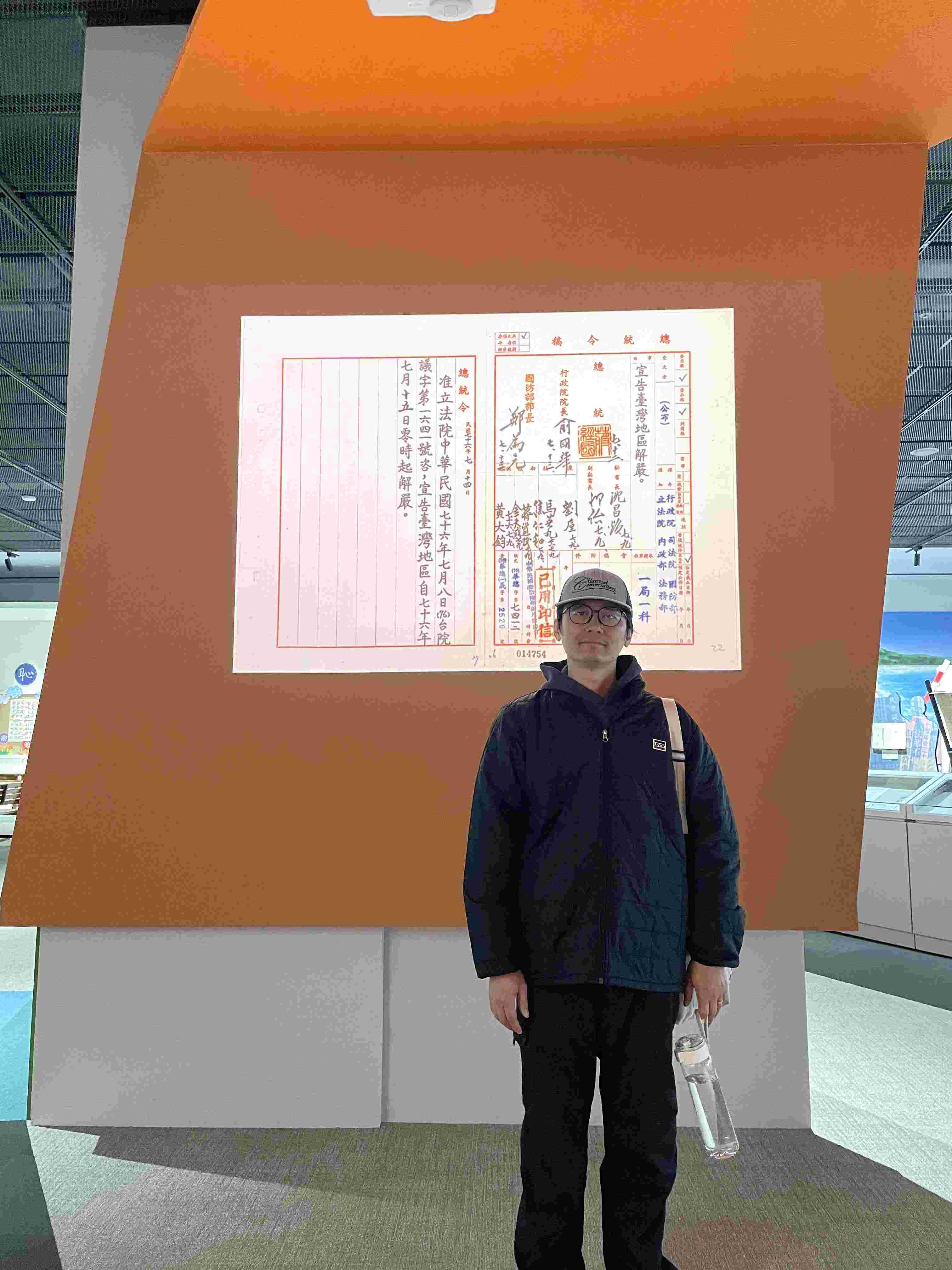
Presidential Order on Lifting of Martial Law in Taiwan
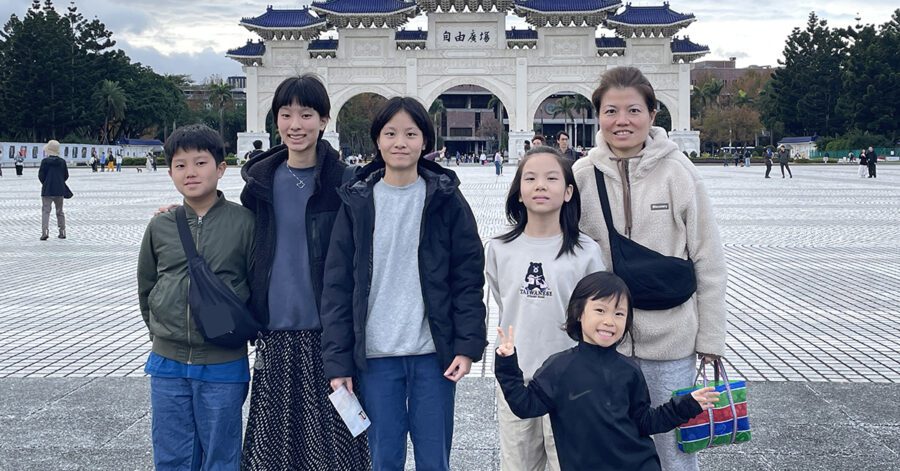
At home, our children often wrestle with abstract concepts like justice and freedom when reading the Bible. However, visiting the National Archives brought home the reality that liberty is not something that simply falls from the sky. Today at Liberty Square, as my children watch the peaceful flow of tourists at Chiang Kai-shek Memorial Hall, they start to understand how this came to pass. It is through “shared suffering” that the democracy they now carry on with was built up.
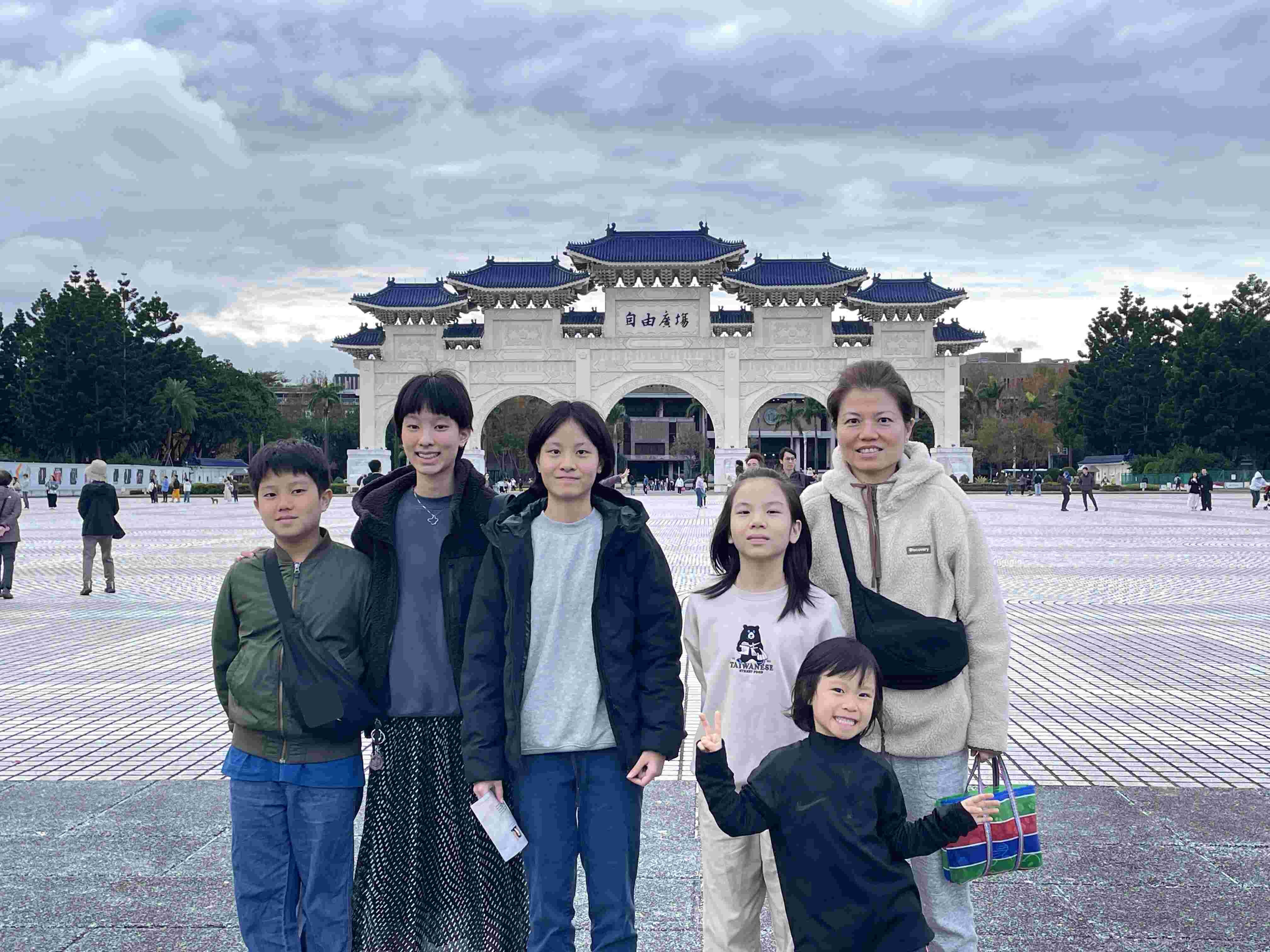
Liberty Square
Read The Search for the Best Homeschool History Curriculum
A Classroom for Math and Economics: Teaching International Homeschool Families to See Cultural Values Through Numbers
When we look into Taiwan’s birth rate data at the National Archives, we are doing more than just counting people; we are digging into the heart of a nation. Math allows us to break down how socio-economic pressure clashes with government propaganda. This approach to using the world as a classroom extends far beyond history.
Numbers in the Birth Rate Slogans
The history of Taiwan’s birth rate is a story of how a nation’s mindset shifted over time.
- 1970s: Fearing overpopulation would hold back progress, the government set out to scale back growth with the “3321” campaign: “two children are just right, and one is not too few.” This was so effective that birth rates dropped off dramatically.
- 1990s: As the birth rate hit “replacement level,” the government tried to ease up on restrictions with a new slogan: “Two is just right, three is not too many.” However, society had already settled into a low-birth mindset that was hard to shake off.
- Today (2026): We are facing up to a “Super-Aged Society.” Even though the government has beefed up support through the “0-6 National Care 2.0” initiative and hands out $100,000 TWD bonuses, the birth rate continues to bottom out.
This shows that financial incentives alone cannot turn around a culture that has moved away from the traditional family structure.
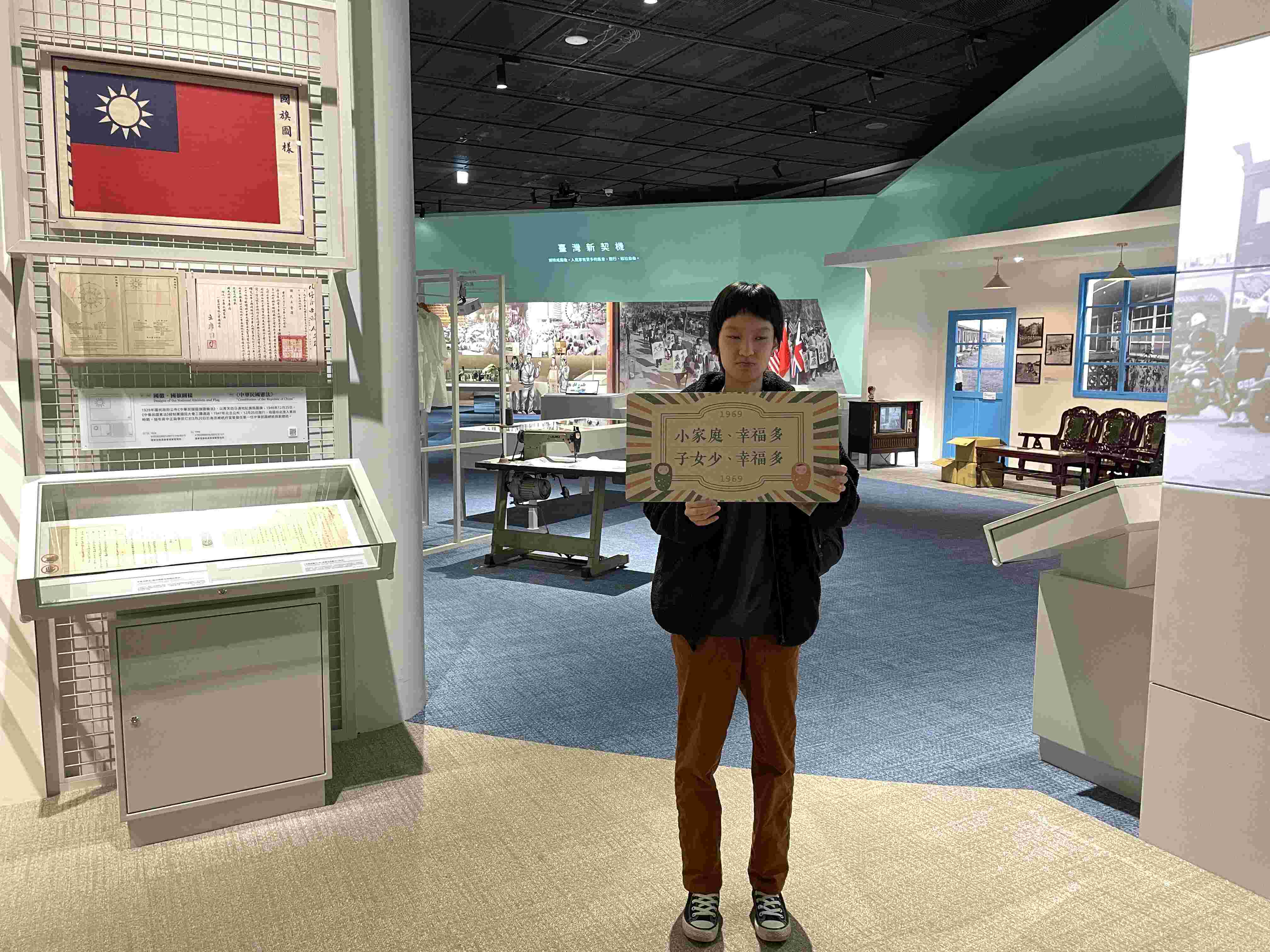
The government’s claim that a small family brings more happiness.
Hidden Values in God’s Mandate
After doing some math, my children lamented: “If only Mom had started having children in 2026, we would have picked up at least $500,000 TWD in bonuses!” My wife answered assuredly that she would never have given up those seventeen years of motherhood for any amount of money. Again, we are training our children to see the unseen, trusting in God’s promises rather than worldly measures. No amount of subsidies can drive up a birth rate if a culture has given up its hope in God’s future.
Find out about Integrating Math and Science in Homeschool: Practical Counting Activities
A Classroom for Art and Foreign Languages: Where Classical Education Globally Reveals Beauty in Plain Sight
The world classroom even takes on the fine arts and classical languages in ways a textbook never could. In international homeschooling, we often set aside Art and Latin as “elite” subjects, but stepping out into our own neighborhood has shown us they are far more accessible than we once thought. Is it possible that the most profound lessons are actually hidden in plain sight? If we aren’t willing to look around, how much of the Creator’s handiwork are we simply missing?
Geometry in the Mist
Just outside the National Archives, we came across a public artwork titled “Fog as a Scenery.” The artist built up a cloud of “fluffy fog” by locking together myriads of intertwining stainless steel squares, showing how rigid materials can blend together to give off a sense of something soft and ethereal. To me, this acts as a “shadow” of the real thing, preparing us to take in the natural wonder that often blankets the Linkou region.
Linkou sits on a high-altitude plateau where moist air mixes with the terrain, frequently bringing about the thick “Linkou fog”. During a “whiteout,” visibility is cut off, transforming the district into a living canvas. While the sculpture is impressive, the fog itself is a heavenly work of art laid out by the Creator, a reminder that challenging conditions can become divine beauty if we look for it.
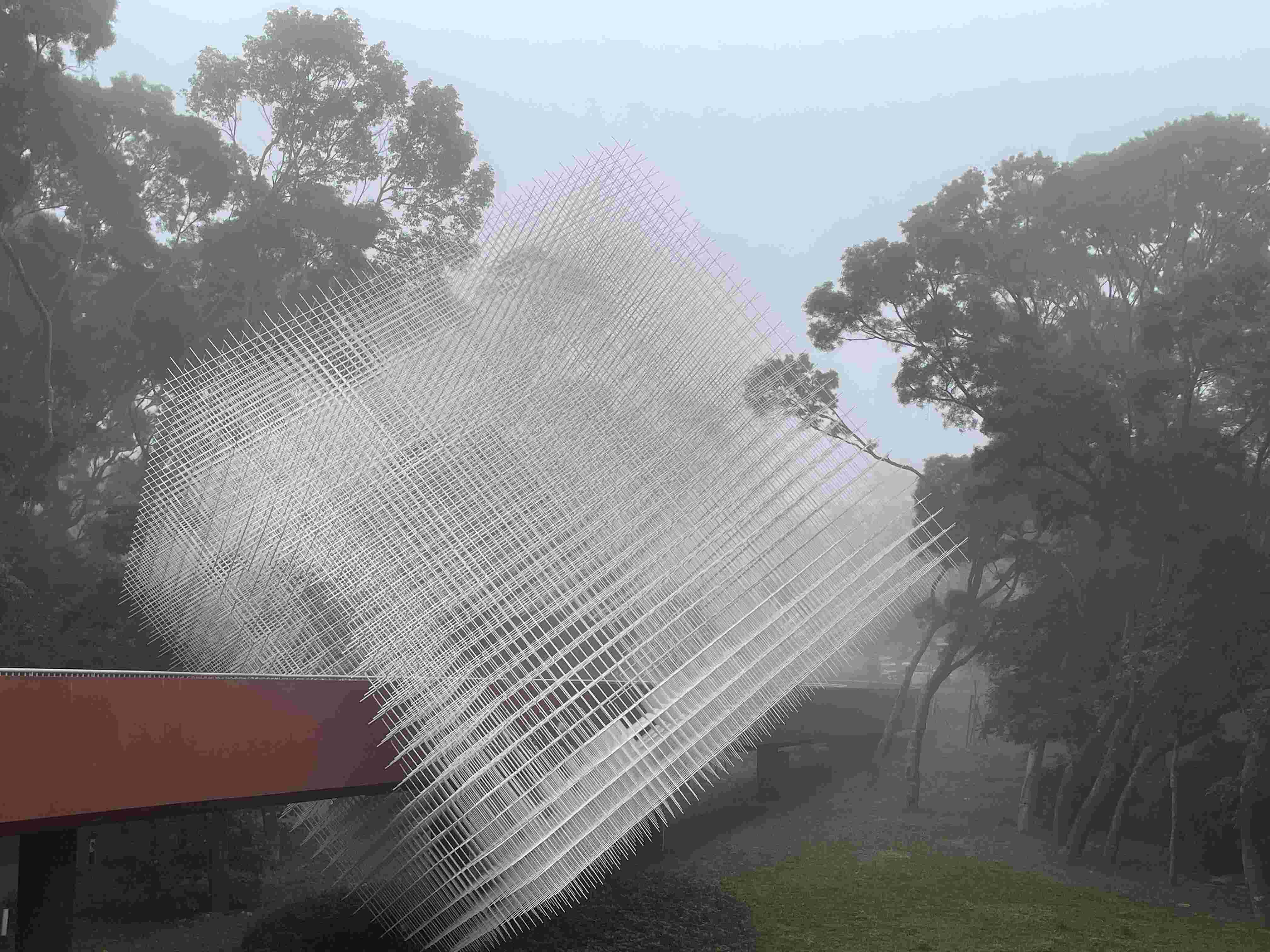
Fog as a Scenery
Learn about Sacred Creativity in Classical Education: Finding God in Art
Latin Under the Feet
Even the ground we walk on acts as a teacher. We found Mandarin and Latin name plates for plants embedded right in the road, attracting the children to look down and learn that trees have a formal, scientific identity. Learning Latin has wired us to spend time trying to pronounce names, allowing us to experience a small part of what Adam did in the Garden of Eden.
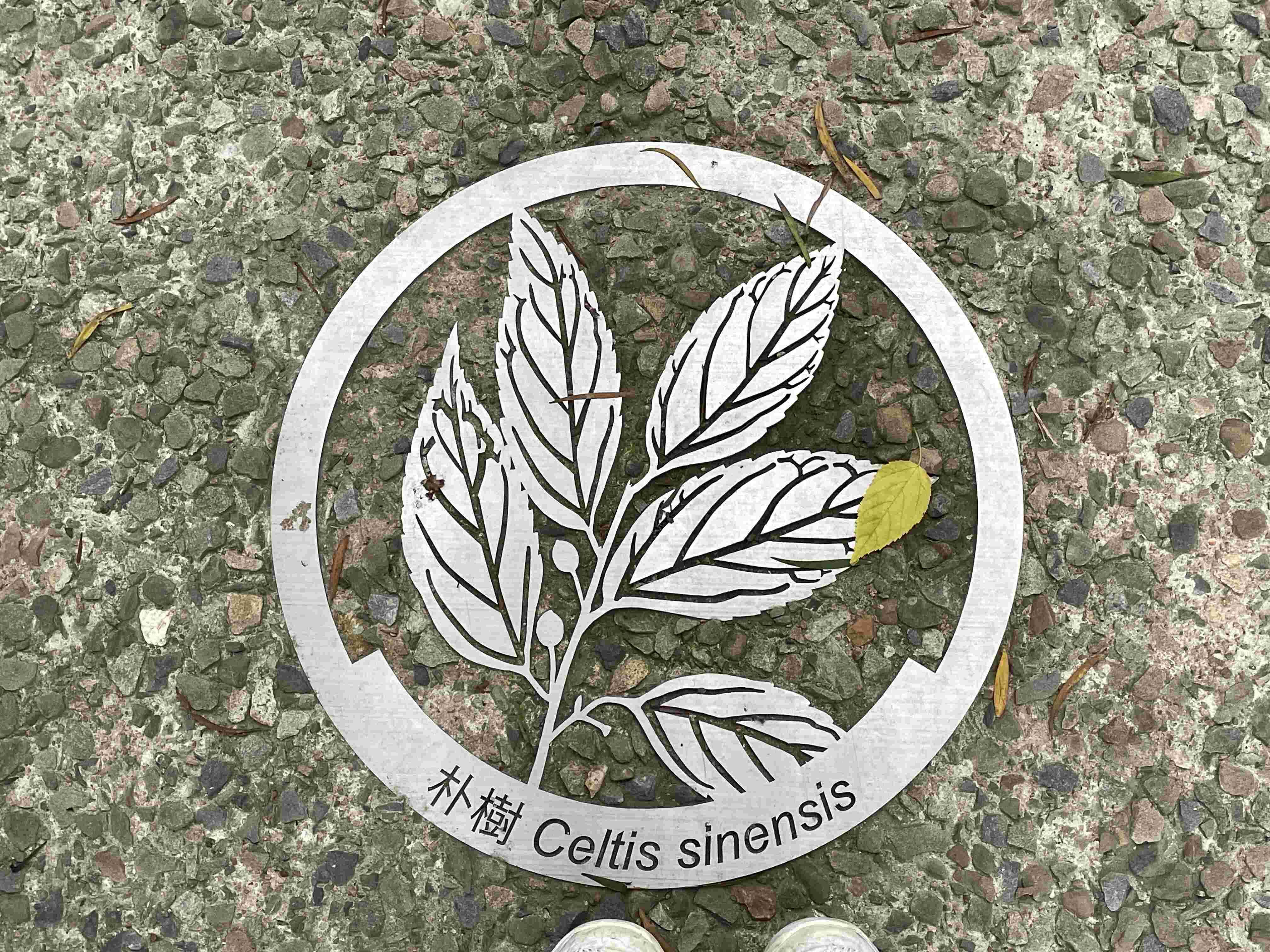
Latin on the ground
Reflection: This Is My Father’s World—A Vision for Homeschooling Overseas
The world belongs to God; how we view it shapes learning, culture, and hope. Education and civic life must be rooted in God’s wisdom, revealed supremely in the cross, not merely human fixes.
Because we long for truth, goodness, and beauty, we turn our hope to the saving work of Jesus. Through His finished work, God satisfies divine justice, redeems our suffering, and sets us free to experience true joy.
Civic education should preserve memory and cultivate moral imagination so freedom is sustained by gratitude and responsibility. Slogans and subsidies cannot restore a culture that has lost hope; demographic decline signals a deeper spiritual and cultural problem.
In times of sorrow and joy alike, these lines point us back to God’s faithfulness.
This is my Father’s world:
O let me ne’er forget
That though the wrong seems oft so strong,
God is the Ruler yet.
This is my Father’s world:
Why should my heart be sad?
The Lord is King: let the heavens ring!
God reigns; let earth be glad!
I am glad that our family chose homeschooling with Classical Conversations because it offers disciplined formation and relevant application. Come and turn the world into the ultimate classroom for worshipful stewardship!
Discover doxology in the Catechesis Wheel
Frequently Asked Questions About Classical Conversations and International Homeschooling
Can you do Classical Conversations internationally?
Yes! Classical Conversations supports international CC families through licensed communities around the world. Classical education is the framework that translates beautifully across cultures because it’s built on universal principles of learning: grammar, dialectic, and rhetoric. Families can access the same curriculum, memory work, and community model that strengthens CC programs worldwide.
Is CC available outside the US?
Absolutely. CC outside the US operates through international communities in numerous countries across Asia, Europe, Latin America, and beyond. The global classical community continues to grow as families discover that classical education globally adapts to any cultural context while maintaining its core foundations. You can connect with CC international support through the international website to find communities near you.
What’s it like to do CC abroad?
Homeschooling abroad with Classical Conversations means your local context becomes part of your curriculum rather than separate from it. Many families’ experiences show that CC’s international homeschool curriculum comes alive when you can trace memory work events to local museums, practice Latin on neighborhood sidewalks, and discuss worldview in light of your host culture’s history. The international homeschool community offers solidarity as you navigate both the joys and challenges of cross-cultural living.
How does international CC work?
International classical education through CC follows the same Parent-Student-Tutor model used in the United States. Families gather weekly for community day, practice memory work at home throughout the week, and progress through the Foundations, Essentials, and Challenge programs. Licensed Directors establish communities following CC’s proven model, adapting practical details to local regulations while maintaining educational consistency. This ensures that whether you homeschool internationally in Taiwan, England, or Brazil, you’re part of one coherent classical conversation.
Are there CC communities worldwide?
Yes, the global homeschool community includes established Classical Conversations communities on multiple continents. While availability varies by region, CC international programs continue to expand as families seek the benefits of classical Christian education regardless of location. Connecting with other international CC families can provide invaluable support, shared resources, and fellowship as you pursue excellence in education wherever God has called you to serve.
Dive deeper into international classical education with these inspiring resources:
- My CC Story-Internationally Speaking (podcast)
- From Homeschool Hesitation to Classical Education: A South African Mother’s Journey
- Homeschooling in Brazil: Standing Firm in the Midst of Persecution (podcast)
Written by: