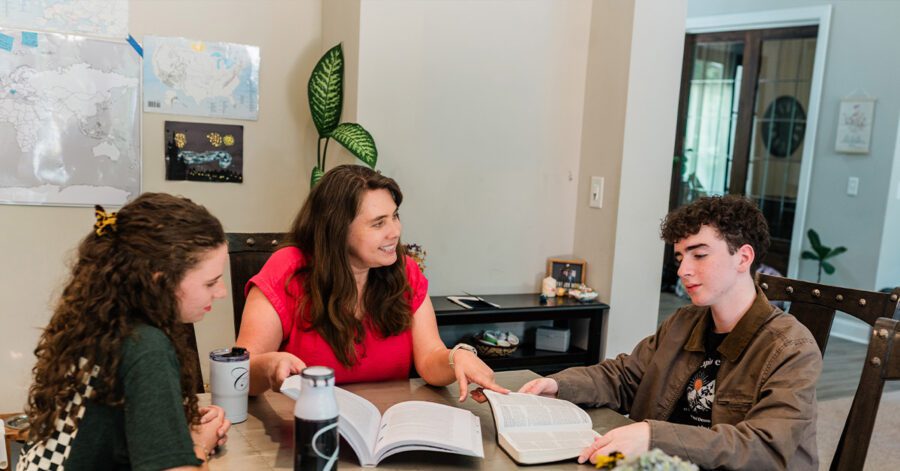

The second semester of homeschooling can feel like an uphill climb. January brings cold days, long nights, and the post-holiday slump, making the excitement of August feel like a distant memory. That’s why a mid-year assessment is so valuable. It’s the perfect opportunity to reflect on your family’s progress by identifying what went well. This is also a time to ask what we can improve, recalibrate your goals, and renew your motivation to finish the year strong!
At Classical Conversations, we hold to core values that guide our homeschool journeys:
- grace in speech
- humility of mind
- integrity in action
- diligence in work
- excellence in results
A mid-year assessment helps bring these principles to life in your homeschool by celebrating victories, addressing challenges with compassion, and setting a fresh vision for growth.
This blog will guide you step-by-step through conducting a meaningful mid-year assessment so you can embrace the second semester with clarity, confidence, and hope.
Reflect on the first semester’s achievements with Humility of Mind
As you look back on the first semester, it’s important to celebrate all the achievements that took place! Take time to count the victories in your student’s academic goals and personal growth. When we reflect on progress, it builds confidence and encourages continued effort in our students.
Looking back at the plans you created at the beginning of the academic year is important. Which milestones were reached? Did your students improve in the skills they were working on? How well did they retain the material they studied? Highlighting these accomplishments helps both you and your students see tangible progress.
An essential part of reflecting on the first semester’s achievements in a mid-year assessment is helping your students recognize their own progress and discuss their achievements and challenges. By developing your students’ self-assessment skills, you help them foster ownership of their learning and motivate them to set manageable goals in the future.
Reflection isn’t just about academics—it’s also an opportunity to reminisce about fun family experiences and character growth. This is a great opportunity to complement the areas where you see the Lord working in your children’s lives, such as acts of service, habits of gratitude, or attitudes of mercy.
As we cheerlead our students’ good works and pat ourselves on the back for a job well done so far, it’s vital to have humility of mind and refocus our praise back to the Lord, who graciously orchestrated these beautiful accomplishments. Gratitude keeps us grounded and reminds us of the greater purpose behind our homeschool journey.
Take stock of areas for improvement with Grace in Speech
It can be easy to look at the beautiful plans and goals we set out in August and be discouraged with ourselves and disappointed with our children because we got so off track or didn’t achieve what we planned.
Why do we often look back and only see the failures? It’s because we love our family and we want to do the best job for them. Blessings can come from addressing the ‘failures,’ though. It’s important to ask ourselves: What can we learn from the shortcomings of the first semester?
In our mid-year assessments, we should address the academic areas that need improvement by considering these reflective questions:
- How do my students learn best?
- You are your child’s best teacher, so tailor your instruction accordingly to best meet each student’s needs. Some students excel by reading independently, while others need auditory support or hands-on activities to synthesize ideas and retain information.
- Have I set reasonable goals for each student individually?
- We must aim to find the sweet spot between setting high standards for our students and not crushing their love of learning.
- What outside circumstances have impacted my student’s progress?
- Life happens. We painstakingly set plans for the perfect year, and then things out of our control throw us a curveball. Identifying these details, such as illness, unexpected events, or family needs, helps us adapt with compassion and resilience. Remind yourself and your student that learning is not a destination but a journey.
Possibly the most important strategy for a mid-year homeschool assessment is fostering a growth mindset in your students. The goal isn’t to criticize but to adjust and grow. We want to assess without shame but do not ignore the problems. With grace in speech, we can ask how we can adapt our learning to grow and improve in the new year.
Pray for God to meet you and your students where we are and lead your family in learning and life. Having this grace-filled attitude reflected in our words for our own internal dialogue and for our children to hear will help us remember that homeschooling is heart training and pursuing a deeper relationship with the Lord.
Set expectations for hard work and reliance on the Lord through Integrity in Action
When math lessons take longer than expected or reading progress feels slow, it’s natural to wonder: Is my child falling behind? It’s such an all-too-common trap we fall into.
But how do we define “behind”? When we start to look around and compare ourselves, our children, and our homeschool, we lose the perspective and purpose of why we homeschool.
Instead, focus on God’s faithfulness. He is working in the hearts and minds of our children. Each of our students is on a unique and individual learning journey, and they need a loving mentor and coach (that’s us!) because they need accountability, not just in academics, but in life skills and character development.
Through the integrity of our actions, we can set meaningful expectations by:
- Establishing clear and achievable goals
- As part of your mid-year assessment, be honest about what worked—and what didn’t—in the first semester. Were your expectations realistic? Did you follow through on assignments? Adjust goals to balance challenges with encouragement.
- Seeking additional resources
- Don’t hesitate to ask for help. Tools like CC Connected can equip you with new strategies. Connect with friends on community days or attend a Parent Practicum to invest in classical education and pedagogy.
Ultimately, our expectations should align with God’s promises for our children. We hold plans loosely, praying for His guidance as we shepherd our children. True success is not just in academics but in nurturing our children’s hearts for the Lord.
Organize your homeschool with Diligence in Work
The new year is a natural time to refresh and reorganize. Once the Christmas decorations are put away, the house often feels clean and ready for new routines. Use this fresh start to create a smoother, calmer transition into a reliably hectic second semester.
Here are some practical steps to organize your homeschool:
- Evaluate your organizational systems
- Does each student have a clear way to keep track of their work? Consider using bins, binders, or online folders to help them develop organizational skills.
- Plan meal prep
-
- Between homeschooling and extracurricular activities, meal prep can save time and money and reduce stress.
- Reassess daily routines
- Are there small changes that could improve efficiency and peace? Starting the day with a devotional or including children in daily chores can create a rhythm that benefits the whole family.
Balance is key. Prioritize what’s most important for your family, whether it’s academics, sports, or shared activities. For some people, sports are life, and they are willing to go the extra mile (literally) to provide this experience for their children. But for others, finding one activity everyone can do together might be the best fit.
Build in time for nature walks, acts of service, or connection with your church community—these experiences are valuable learning times that don’t fit a ‘classroom’ mold but create well-rounded children.
Consistency in planning and record-keeping is another way to stay diligent. CC Connected offers its members the online Transcripts tool that simplifies record keeping. Take time now to organize the first semester’s records and set up a system for tracking progress throughout the second semester. When May arrives, you’ll be thankful for your efforts.
Plan to finish the academic year strong with Excellence in Results
Second semester is the final push. From our chilly January vantage point, the spring semester may seem like a long road ahead, but the end of the year will arrive in a flash. So plan now to finish strong with excellence in results.
We collect the wins from first semester and show students their hard work and progress. Next, work together to identify areas for improvement to help them move forward and grow in the second semester.
Two ways to ensure your homeschool can finish strong with excellence in results are:
- Time management
- Creating small habits to achieve big goals
Identifying ways to improve in these areas for both ourselves and our students will create practices that will yield great results in the second semester.
Excellence in results does not always mean an A+ on a report card; it’s about nurturing beautiful souls, strengthening relationships, and deepening faith. As CC mom Brittany Lewis eloquently says, assessing our students is like “hunting for God’s fingerprints on the world.”
Encourage your students to pursue academic excellence while also developing lifelong learning skills and a heart for the Lord. With intentionality, prayer, and practical strategies, your family can end the year with not just academic success but eternal impact.
Conclusion: From Mid-Year Assessment to End-of-Year Excellence
Homeschooling is a journey filled with both challenges and blessings, and the mid-year assessment is a chance to reflect, recalibrate, and refocus. As you look back on the first semester, celebrate the wins—both big and small—and give yourself grace for the areas that didn’t go as planned.
Approach the second semester with high expectations tempered with empathy and wisdom. Set clear goals, encourage your students, and remember that success is not measured solely by grades but by the character and perseverance cultivated along the way. With prayer, intentional planning, and reliance on the Lord, you can guide your homeschool toward a strong and fruitful finish.
If you’d like to hear more tips about Assessing for the New Year with guest Brittany Lewis, join the Everyday Educators podcast to be encouraged.
It’s never too late to join a Classical Conversations community—whether at the start of the year or midway through—where you’ll find support and fellowship to help you and your family thrive.
The second semester offers a fresh opportunity to celebrate learning as an act of worship. Embrace this season with confidence and purpose, finishing the academic year with grace, diligence, and excellence!