You’re weighing your online homeschool vs community options, and the online platforms look appealing. Log in whenever it’s convenient. No traffic. No getting everyone out the door. Just you, your child, and a screen delivering solid academic content. It seems like the perfect solution to one of homeschooling’s biggest challenges: doing it all alone.
But here’s what keeps nagging at you: Is screen-based learning really enough? Can online homeschool truly provide everything your children need to flourish?
While home-centered education has grown dramatically over the past four decades, the question of how to homeschool has become just as important as the decision to homeschool at all. The digital marketplace now offers countless virtual programs promising complete curricula, certified teachers, and flexible schedules. Yet families who choose this path often find themselves facing unexpected isolation, wondering why something still feels missing despite all the convenience.
At Classical Conversations, we’ve walked alongside thousands of homeschool families for over twenty-five years, and we’ve learned something crucial: classical education community transforms not just what children learn but who they become. A living, breathing community is an indispensable aspect of formation that no screen can replicate. While the convenience of virtual homeschool vs. traditional face-to-face learning might seem appealing, the depth of formation that happens through real relationships simply cannot be downloaded.
Online Homeschool vs. Community: What Makes the Difference?
The debate between online school vs. homeschool community isn’t really about technology versus tradition. It’s about what children actually need to flourish. Screen-based learning alternatives have their place, and many families use technology as a helpful supplement. But when digital platforms become the primary means of education, something profound is lost.
Classical education has always been a communal endeavor. From Socrates dialoguing in the marketplace to medieval students gathering in universities, the classical tradition recognizes that we grow not just by consuming content but by wrestling with ideas alongside others. This is why the classical community model remains so powerful today, even in our digital age.
Find a Classical Conversations Community Near You
Three Reasons Classical Education Community Transforms Homeschooling
1) Weekly Accountability That Creates Stability
The first reason that education is most fruitful within community is that it provides you, as the home educator, with weekly accountability. One blessing of home-centered education is the flexibility to adjust the day’s schedule when needed, but this liberty can become chaos when interruptions become routine.
Knowing that there are four school days between one homeschool community day and the next provides the external structure to help establish stable, daily rhythms at home. These routines help both you and your students know what to expect in a regular school day, and an interruption to the routine remains exactly that: an interruption to a stable schedule, not the chaotic norm.
This is one of the most overlooked benefits of homeschool support groups, such as a Classical Conversations (CC) community. While online learning platforms allow you to log in whenever convenient, that very flexibility can undermine the discipline required for deep learning. The CC community day serves as an anchor point in your week, creating natural homeschool accountability for your family.
When you know you’ll see other families who are working through the same memory work, the same grammar, the same dialectic skills, there’s a gentle but real motivation to stay consistent. This isn’t pressure or judgment. It’s the simple reality that learning together is more sustainable than learning alone.
2) Personal Encouragement Through Shared Experience
The second reason that education is most fruitful within community is that it provides personal encouragement. While accountability helps provide stability for the school day, rarely does anything go exactly as planned. Coming together with other homeschooling parents provides a chance to swap schooling stories and share parenting tips, but it also means reaching out to hug one another and kneeling down to pray together.
As Scripture says in Ecclesiastes 4:9-10, “Two are better than one, because they have a good reward for their labor. For if they fall, the one will lift up his fellow, but woe to him that is alone when he falleth, for he hath not another to help him up.”
When education happens primarily through screens, you can feel isolated in your struggles. The homeschool parent community you find in a CC community provides something no online forum can replicate: embodied presence. You need people who will look you in the eye and remind you that you’re not failing, that the hard days are normal, that your faithfulness matters even when it feels invisible.
Face-to-face learning benefits extend beyond academics. Children learn better when they can read body language, engage in spontaneous dialogue, and build friendships through shared experiences. And you need this too. The encouragement you receive when another mother squeezes your hand and prays with you after a difficult week cannot be reduced to an emoji reaction on a screen.
Read about The Benefits, Blessings, and Beauty of a Smaller Classical Conversations Community
3) Friends and Mentors Who Shape the Journey
The third reason that education is most fruitful within community is that it provides the friends and mentors that every home educator needs. God did not require an education degree before he gave you your children, but to educate them well, you need the influence of good people pursuing similar ends through similar means.
Just because you don’t need a degree to become a parent doesn’t mean you shouldn’t pursue becoming a better parent. So, how do you grow? By reading books? Yes. By watching webinars and listening to podcasts? Absolutely. By participating in online discussion forums? Certainly. But these are only the beginning.
You also grow by reading and dialoguing together, eating and working together, laughing and crying together, struggling and succeeding together. Each of us has something to offer those walking beside us. Over time, each will be a mentor to someone else through listening, attending, and sharing the same experiences for however long God keeps us together.
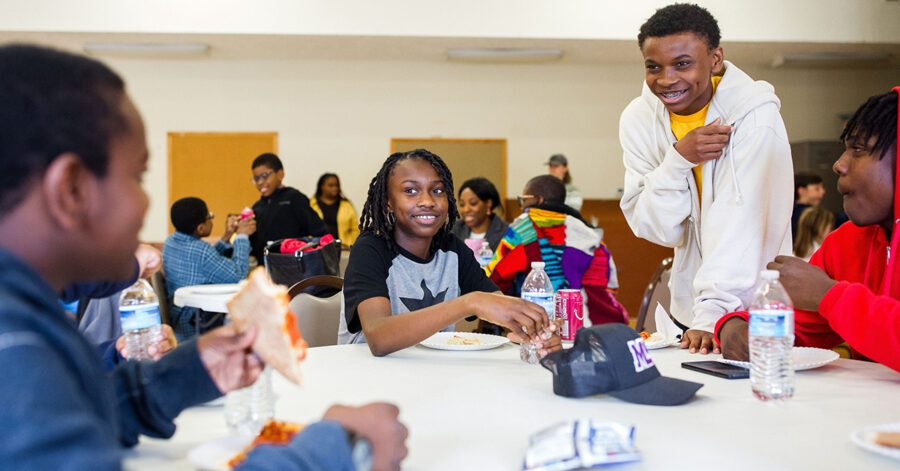
This addresses one of the most common concerns you might have: homeschool socialization. When people ask, “How do homeschoolers make friends?” they’re often imagining isolated children learning alone. But a multi-age learning community like Classical Conversations provides rich homeschool social interaction across ages, stages, and family cultures. Children observe older students tackling harder material and become mentors to younger students who look up to them.
The relationships in education matter. Research in social learning theory, pioneered by psychologist Albert Bandura, demonstrates that children learn not just from direct instruction but from observing, imitating, and interacting with others in their environment. When education becomes primarily screen-based, these natural mentoring relationships simply don’t develop the same way.
Read about The Classical Conversations Tutor: Model and Mentor
The Heart of the Matter: Why Community Can’t Be Replaced
Here’s what this all comes down to: online learning disadvantages aren’t primarily about academic quality. Many virtual programs offer solid content. The real loss is formational. Character is formed in community. Wisdom is passed down through relationships. Courage grows when you see others persevere. Joy multiplies when it’s shared.
Homeschool isolation is a real concern, and it’s one of the most compelling reasons families seek out a classical education community. When you and your children engage with the same families week after week, working through challenges together and celebrating victories together, you’re building the kind of friendships and shared history that sustain faith and character over the long haul.
This is why Classical Conversations has always been built around the community model rather than becoming another online platform. We believe that what happens on community day cannot be replicated through a screen because education is not merely the transfer of information. It’s the formation of souls, and that formation happens best in the presence of others who share your values and your mission.
Putting Community Into Practice
Getting more involved in your homeschool community doesn’t require heroic effort. Whether you’re already part of Classical Conversations or considering joining, here are some practical ways to invest in your community experience:
Show up consistently. Your regular presence matters more than you realize. Children and parents both benefit from the stability of seeing the same faces each week.
Stay after community day. Some of the richest conversations and connections happen in those informal moments when families linger in the parking lot or over lunch.
Ask for help when you need it. Vulnerability builds connection. When you admit you’re struggling with a particular subject or parenting challenge, you give others permission to do the same.
Celebrate others’ victories. When another family’s child excels or overcomes a challenge, rejoice with them. Your genuine encouragement strengthens the entire community.
Pray for your community. Ask God to bless the other families, the Director, and the Tutors. Pray by name for children who are struggling and parents who are weary.
Invite someone to coffee or a playdate. Community day provides the spark, but deeper friendships often develop when you connect outside the formal structure.
111 Awesome Homeschool Group Activities to Connect with Community
Frequently Asked Questions
Is online homeschool as good as in-person?
Online homeschool programs offer solid academic content and convenience, but they cannot replicate the formational benefits of in-person community. Research from the National Education Policy Center found that virtual schools consistently underperform traditional face-to-face instruction, with students experiencing lower academic growth and retention rates. Classical education has always been communal, built on dialogue and relationships.
How do homeschoolers make friends?
Homeschoolers build friendships through intentional community involvement: co-ops, sports teams, church groups, and neighborhoods. In Classical Conversations, children connect naturally through shared weekly learning experiences. Multi-age communities help children relate well to different ages, not just peers. These friendships often run deeper than conventional school relationships because they’re built on shared values and meaningful interaction, extending beyond weekly gatherings into lasting family connections.
Why is community important in homeschooling?
Community provides accountability that creates stability, encouragement that sustains you through challenges, and relationships that shape character. Without it, homeschooling can become isolated and unsustainable. Parents need other parents who understand their struggles and pray with them through difficult seasons. Children need peers and mentors who model learning and encourage growth. Community transforms homeschooling from a solitary endeavor into a shared journey of formation.
What is community day?
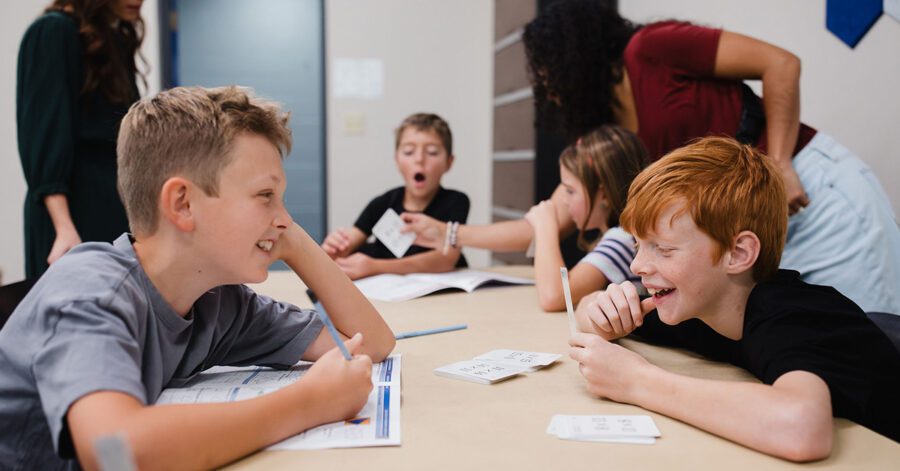
Community day is the weekly gathering where Classical Conversations students, parents, and Tutors learn together. Students engage in memory work, presentations, and group discussions alongside peers. Parents gain accountability, encouragement, and observe experienced Tutors modeling effective classical pedagogy. Meeting once per week for about six hours, families then complete additional work at home during the remaining four days, creating a sustainable rhythm between communal and individual learning.
Can you do Classical Conversations online?
Classical Conversations is designed for in-person interaction because classical education thrives in face-to-face community. While families use the online parent resource, CC Connected, to equip parents to be classical educators, the core experience for families centers on weekly in-person gatherings. True education requires dialogue, relationship, and formation that happens when people learn together. The friendships, mentoring, and character development through consistent face-to-face interaction cannot be replicated through screens.
Community Worth the Commitment
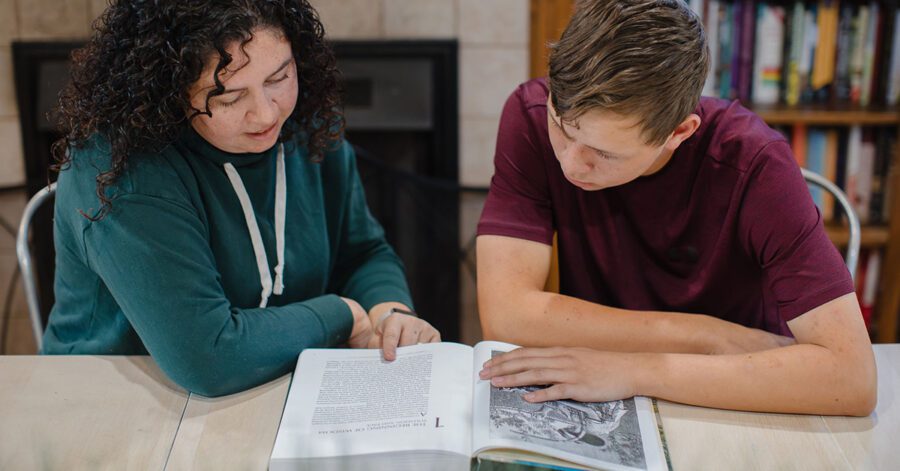
Home education begins around your dining room table. That’s where it should start: with you as the parent, faithfully teaching your children day by day. This family foundation is irreplaceable. But the faithfulness of those who have come before has given today’s home educator a remarkable gift: the opportunity to extend that dining room table learning into a broader community, gathering with other families who share your mission and values. This physical community provides weekly accountability, personal encouragement, and needed mentorships to help everyone stay the course and complete the journey of educating the next generation.
The choice between online homeschool vs. community isn’t really about convenience versus inconvenience. It’s about recognizing what your children truly need and what you truly need as their teacher. Yes, getting everyone ready and out the door for community day takes effort. Yes, there are weeks when staying home with a screen-based curriculum sounds easier. But the relationships you build, the formation that happens, and the encouragement you receive make it worth every bit of effort.
Classical education is, at its heart, about pursuing truth, goodness, and beauty together. “Together” is not incidental to that mission. It’s central. When you choose classical education community over purely online alternatives, you’re choosing to invest in something that will shape your family for generations to come. You’re choosing embodied presence over digital convenience, depth over ease, and the slow work of formation over the quick consumption of content.
That’s a choice worth making.