
It looks like the name of a Dr. Seuss character, but in my house the “Who-What-How-What” refers to literary analysis. Do not tell the kids, though, that would take the fun out of it.
It is a series of questions that helps us talk, think, and write about literature. You can use it as a discussion guide after reading a picture book aloud with young children, to help an older student organize a paper, or to study the Bible together.
The first question is, “WHO is the story about?” Talk about each character, who they are, and what they are like. Where did they live and in what time period? You can eventually tell your children these are called ‘characterization’ and ‘setting.’
The second question is, “WHAT is the problem in the story?” There may be more than one problem. Can you identify the main problems? What caused them? What complicated them? The events that unfold as the problems develop are called the ‘plot.’
The third question is, “HOW was the problem solved?” The most exciting moment of the story is usually the event that leads to the solving of the problem. That moment is the ‘climax’ of the story. The solving of the problem is the ‘resolution.’
Finally, I ask the children, “WHAT can we learn from this?” or “What does the Bible have to say about this?” This question reveals the ‘theme’ of the story, and it can generate thoughtful discussions even with the youngest of literary analysts.
You may recognize these questions from IEW’s Teaching Writing Structure and Style (it can be found in the Story Sequence Chart) and from Adam Andrew’s DVDs Teaching the Classics*. I just created a catchy phrase that sums up what they develop fully in their programs. I highly recommend watching both sets of DVDs to really see the importance of literary analysis with children.
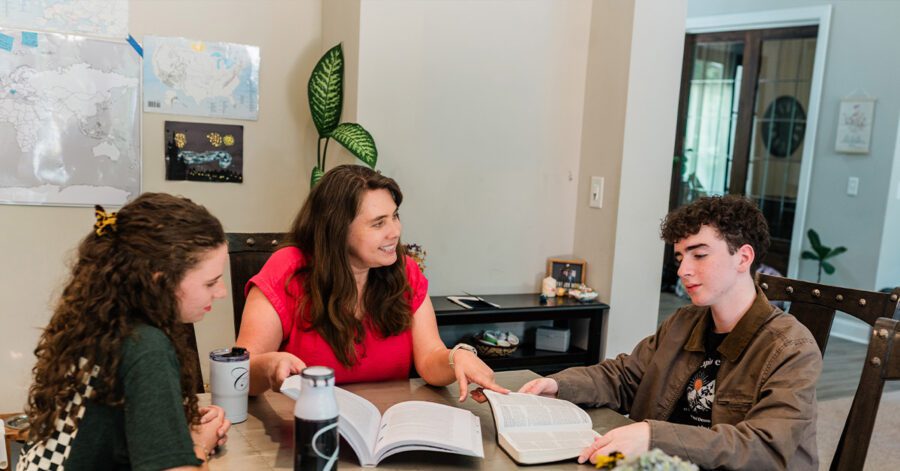
I have been using this discussion method to study The Children’s Illustrated Bible with my children. I read one story out loud and use the four questions to lead a discussion. This helps me to be more Socratic and less “preachy,” allowing my children to practice thinking for themselves. I bought each child a Sketch Notebook from ClassicalConversationsBooks.com so they could make some notes about each Bible story. The youngest draws a picture and writes the title of the story in his notebook. The older students write out the “Who-What-How-What” using brief answers. They often add a Bible verse that sums up the theme of the story. We do this about twice a week.
The result has been a very special book they have each created presenting the major Bible events in order: their own Bible timelines. It has been a most classical and enjoyable way to thoroughly study the Bible together. I hope you will give it a try with Bible stories or with whatever you are reading aloud at bed time tonight. You will find that this prepares your children well to discuss and write about great literature. Perhaps one day there will also be a plush toy, some crazy striped animal with a long tail called, “The Who-What-How-What.”