
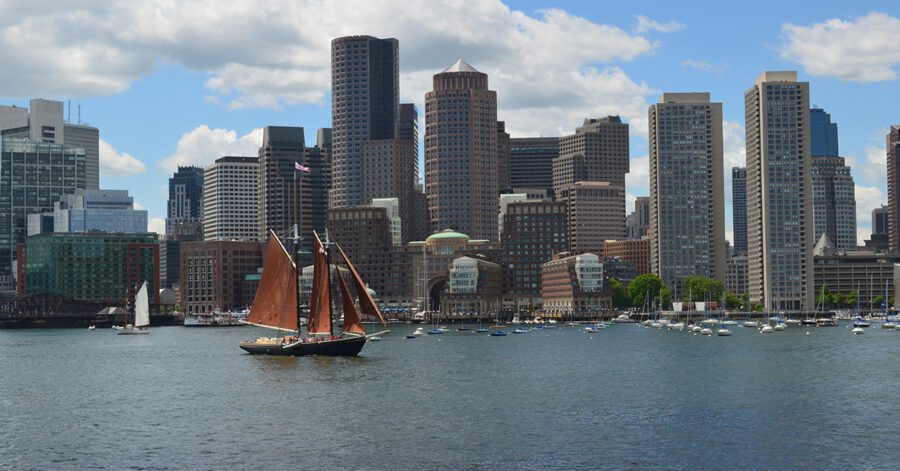
Planning Boston field trips homeschool families will love? This is your year. 2026 marks the 250th anniversary of American Independence, and there’s no better place to experience it than where it all began. From the cobblestone streets of the Freedom Trail to the tall ships at the harbor, Boston turns your history book pages into real life for your children.
The destinations in this guide come straight from CC moms and families just like you and are tested, recommended, and curriculum-connected. These Boston field trips homeschool families love are curated from Foundations Cycle 3 American history to Challenge I American documents and Challenge III A Patriot’s History book.
Plus, Classical Conversations families often coordinate these trips together, which means you get the community, shared planning, and kids who already know each other’s memory work.
🌱 Science & Nature
Boston Educational Tours for Science and Natural History
Museum of Science – Charles Hayden Planetarium
Home to New England’s most advanced planetarium, the Museum of Science features immersive astronomy shows, hands-on exhibits covering physics and engineering, and live demonstrations. The Hayden Planetarium’s cutting-edge projection system brings the cosmos to life for students studying celestial navigation, astronomy, or physics.
Great for: All ages
Homeschool-friendly: Homeschool group rates and designated homeschool days throughout the year; planetarium shows perfect for Cycle 2 astronomy and Challenge B astronomy studies; demonstrates God’s design in the cosmos; extensive STEM exhibits connect with physics and engineering studies across all Challenge levels.
This harbor-front aquarium features a four-story Giant Ocean Tank with Caribbean reef animals, harbor seal exhibits, a penguin colony, and touch tanks. Educational programs emphasize marine biology, ocean conservation, and New England’s maritime ecosystem. Students observe hundreds of species while learning about aquatic habitats.
Great for: All ages
Homeschool-friendly: Group rates and educational programs available; perfect for Cycle 1 biology and ocean studies; demonstrates biodiversity and marine ecosystems; connects with New England’s maritime heritage and ocean conservation.
Harvard Museum of Natural History
Located on Harvard’s campus, this museum houses the famous Glass Flowers collection, extensive mineral galleries, and world biodiversity exhibits. The Blaschka Glass Flowers, over 3,000 handcrafted botanical models, are unmatched anywhere in the world. Students explore paleontology, geology, and natural history in beautifully curated galleries.
Great for: All ages
Homeschool-friendly: Free admission for Massachusetts residents on Sunday mornings; group rates available. Stunning Glass Flowers show the intersection of art and science.
Walden Pond State Reservation (Concord)
Henry David Thoreau’s famous retreat offers swimming, hiking trails, and the replica site of his cabin. This literary and natural landmark invites reflection on Transcendentalist philosophy, nature observation, and Thoreau’s experiment in simple living. The peaceful woods and pond create perfect settings for nature journaling and contemplation.
Great for: Essentials – Challenge
Homeschool-friendly: Parking reservations required in summer; combines literature with nature study; perfect for reading Walden and discussing Transcendentalism; connects with American literature studies.
Halibut Point State Park (Gloucester)
This dramatic coastal park features a massive abandoned granite quarry, rocky shoreline, tide pools, and stunning ocean views. The flooded quarry and surrounding trails teach about Cape Ann’s granite industry, geology, and coastal ecosystems. Students explore industrial history while enjoying hands-on tide pool discovery.
Great for: All ages
Homeschool-friendly: Free admission; combines geology, industrial history, and marine biology; perfect for Cycle 1 geology.
Mount Auburn Cemetery (Cambridge)
America’s first garden cemetery combines landscape architecture, horticulture, and history. The beautifully designed grounds feature notable graves (including many famous Bostonians), diverse tree collections, and peaceful walking paths.
Great for: Essentials – Challenge
Homeschool-friendly: Free admission; combines history, art, and nature; perfect for studying landscape design and American cultural history; peaceful setting for reflection and bird watching.
🏛 History & Culture
Boston History Field Trips and Revolutionary War Learning
Walking the Freedom Trail
This 2.5-mile red-brick path connects 16 historically significant sites from the American Revolution. From the Massachusetts State House to the USS Constitution, the trail brings Revolutionary War history to life. Students walk where the Founders walked, stand where history was made, and encounter the places described in history books.
Great for: All ages
Homeschool-friendly: Free to walk; essential for Cycle 3 American history and Challenge I studies; brings Revolutionary War to life; self-paced or guided tours available; connects with original documents and founding government principles; perfect preparation for studying the Declaration of Independence and Constitution.
Key Freedom Trail Sites:
Paul Revere’s downtown home (built c. 1680) is the oldest remaining structure in downtown Boston. Students tour the colonial house where Revere lived during his famous midnight ride, seeing period furnishings and learning about colonial life and Revolutionary activism.
Great for: All ages
Homeschool-friendly: Group rates available; perfect for Cycle 3 and Challenge I; brings Paul Revere and colonial life into focus; demonstrates daily life during the Revolutionary period.
“One if by land, two if by sea”—this active Episcopal church is where the signal lanterns were hung to warn of British troop movements. The beautiful colonial interior, box pews, and church bells create an authentic Revolutionary setting. Students learn about the church’s role in the Revolution and the importance of faith communities in America’s founding.
Great for: All ages
Homeschool-friendly: Tours available; combines church history with Revolutionary War; perfect for Cycle 3; demonstrates the role of faith in the American founding; active church shows continuity of Christian witness.
Built in 1713, this building served as the seat of colonial government and the site of the Boston Massacre. The balcony where the Declaration of Independence was first read to Bostonians overlooks the massacre site. Students encounter the tensions between colonists and the Crown that led to revolution.
Great for: Essentials – Challenge
Homeschool-friendly: Museum exhibits included; essential for understanding pre-Revolutionary tensions; connects with Challenge I studies of our colonial government and the Revolution.
Called the “Cradle of Liberty,” this meeting hall hosted Revolutionary debates and continues as a public space. The historic hall above the marketplace preserves the room where Samuel Adams, James Otis, and others argued for colonial rights. Students encounter the birthplace of American political debate.
Great for: All ages
Homeschool-friendly: Free admission to historic hall; marketplace offers food and shopping; demonstrates public discourse and civic engagement.
This 221-foot granite obelisk commemorates the first major battle of the Revolution. The monument and adjacent museum tell the story of the battle where American forces, though forced to retreat, proved they could stand against British regulars. Climbing the 294 steps rewards visitors with panoramic views of Boston.
Great for: All ages
Homeschool-friendly: Free admission; monument climb is physically demanding but rewarding; essential Cycle 3 and Challenge I Revolutionary War study; museum exhibits explain the battle’s significance; demonstrates American resolve and sacrifice.
“Old Ironsides” is the world’s oldest commissioned warship still afloat. Students tour the naval vessel, learning about the War of 1812, naval warfare, and life aboard ship. The museum features hands-on exhibits and demonstrates how the young American Navy defended the nation.
Great for: All ages
Homeschool-friendly: Free admission; active naval vessel with tours; connects with Cycle 3 American history and War of 1812 memory work; demonstrates naval history and American maritime strength.
Click the Freedom Trail Map to view more stops
Beyond the Freedom Trail
Boston Tea Party Ships & Museum
This interactive floating museum recreates the events of December 16, 1773. Students participate in throwing tea overboard, explore full-scale replica ships, meet costumed actors portraying historical figures, and visit exhibits explaining the taxation crisis. The immersive experience makes the “no taxation without representation” crisis tangible.
Great for: All ages
Homeschool-friendly: Timed tickets required; interactive and engaging for all ages; perfect for Cycle 3 and Challenge I; brings the Tea Party to life; demonstrates the colonial taxation crisis and protest.
Minute Man National Historical Park (Lexington & Concord)
This park preserves the sites where “the shot heard ’round the world” began the Revolution. Students walk the Battle Road Trail, see the North Bridge where colonists first fired on British troops, visit the Minute Man Visitor Center, and explore Lexington Green where the first blood was shed.
Great for: All ages
Homeschool-friendly: Free admission; Junior Ranger programs available; essential for Cycle 3 and Challenge I; demonstrates how the war actually began; perfect for reading Johnny Tremain or discussing Paul Revere’s ride.
Plimoth Patuxet Museums (Plymouth)
This living history museum recreates the 17th-century English colonial settlement and the homeland of the Indigenous Wampanoag people. Students encounter costumed interpreters portraying actual Pilgrims, explore the Mayflower II replica, and learn about the Indigenous people. The museum presents both colonial and Native perspectives.
Great for: All ages
Homeschool-friendly: Seasonal hours; extensive educational programs; perfect for Cycle 3 colonial history; demonstrates Pilgrim life, Wampanoag culture, and early American settlement; connects with discussions of religious freedom and cultural encounter.
Saugus Iron Works National Historic Site (Saugus)
This reconstructed 17th-century ironworks demonstrates early American industry and technology. Working waterwheels, furnaces, and forges show how colonists produced iron and steel. Students learn about colonial manufacturing, waterpower, and the technological foundations of American industry.
Great for: Essentials – Challenge
Homeschool-friendly: Free admission; Junior Ranger programs available; connects with colonial history and industrial development; demonstrates early American technology and craftsmanship.
Lowell National Historical Park – Boott Cotton Mills Museum (Lowell)
This museum preserves the heritage of America’s Industrial Revolution. The weave room features 88 operating power looms, creating authentic textile mill sound and experience. Students learn about the mill girls, labor conditions, immigration, and how industrialization transformed America. The boarding house tour shows how young women lived while working in the mills.
Great for: Essentials – Challenge
Homeschool-friendly: Junior Ranger programs available; combines industrial history with social history; perfect for studying the Industrial Revolution; demonstrates technological change and labor history; connects with discussions of working conditions and social reform.
Peabody Essex Museum (Salem)
One of America’s oldest continuously operating museums features maritime art, Asian export art, and New England decorative arts. The museum’s China Trade collections and period houses demonstrate Salem’s role as a major seaport. Students encounter global trade history and cultural exchange through art and artifacts.
Great for: All ages
Homeschool-friendly: Free admission for youth; educational programs available; combines art history with maritime trade; demonstrates global connections and cultural exchange; beautiful galleries showcase craftsmanship.
Salem Witch Museum (Salem)
This museum presents the Salem witch trials of 1692 through dramatic presentations and exhibits. Life-size stage sets and narration recreate the accusations, trials, and executions. The museum examines the causes and effects of the hysteria while connecting to modern-day scapegoating and persecution.
Great for: Essentials – Challenge
Homeschool-friendly: Group rates available; appropriate for students who can handle difficult content. Please use caution with younger or sensitive children; connects with colonial history and discussions of justice, fear, and false accusation; raises important questions about mass hysteria and moral courage.
The House of the Seven Gables (Salem)
Nathaniel Hawthorne’s cousin’s home inspired his famous novel. The 1668 house features secret passages, period rooms, and beautiful gardens. Students tour the historic house while connecting it to American literature, colonial architecture, and Salem’s maritime heritage.
Great for: Essentials – Challenge
Homeschool-friendly: Group tours available; combines literature with history; perfect for reading Hawthorne; demonstrates colonial architecture and maritime Salem.
🎨 Arts & Creativity
Boston Field Trips for Homeschool Cultural Enrichment
Isabella Stewart Gardner Museum
This Venetian-style palace houses Isabella Stewart Gardner’s spectacular personal collection in rooms arranged exactly as she specified. The museum features European masterpieces, Asian art, a stunning courtyard garden, and the site of history’s largest unsolved art heist. Students encounter art in an intimate, curated setting that emphasizes beauty and personal taste.
Great for: Essentials – Challenge
Homeschool-friendly: Free admission for youth under 18; stunning architecture and art collection; perfect for Challenge II art history; demonstrates how one woman shaped cultural taste; central courtyard garden offers peaceful beauty.
One of America’s most comprehensive art museums features collections spanning from ancient Egypt to contemporary art. The museum houses works by Monet, Renoir, Copley, Sargent, and countless masters. The American Wing showcases works by Grandma Moses and other American artists featured in Foundations Fine Arts. Students encounter global artistic traditions and beauty across cultures.
Great for: All ages
Homeschool-friendly: Free admission for youth; extensive educational resources; perfect for Foundations Fine Arts and Challenge II art history; demonstrates artistic excellence across cultures and time periods; family programs available.
Worcester Art Museum (Worcester)
This comprehensive museum features 38,000 works spanning 5,000 years. Collections include ancient mosaics, medieval armor, American art, and contemporary works. The museum’s Higgins Armory Collection is one of the finest medieval armor collections in America.
Great for: All ages
Homeschool-friendly: Free admission for youth; combines art with history; perfect for Cycle 2 medieval studies and Challenge II art history; armor collection demonstrates medieval craftsmanship.
This hands-on museum features interactive exhibits, including a three-story climbing structure, Japanese House, construction zone, and art studio. Designed for children from birth to age 10, the museum emphasizes learning through play, cultural awareness, and creative exploration.
Great for: Preschool – Foundations
Homeschool-friendly: Group rates available; perfect for younger homeschoolers; provides engaging, play-based learning; ideal for tactile learners and active children.
🌳 Off the Beaten Path & Unique Experiences
Hidden Gems and Unique Educational Destinations
Castle Hill on the Crane Estate (Ipswich)
This stunning 1920s Great House overlooks the Atlantic from 2,100 acres of coastal estate. The 59-room Stuart-style mansion features original furnishings, while the grounds include the Grand Allée—a quarter-mile-long lawn leading to the sea. Students explore Gilded Age architecture, landscape design, and coastal ecosystems.
Great for: Essentials – Challenge
Homeschool-friendly: Seasonal tours available; combines architecture, history, and natural beauty; demonstrates Gilded Age wealth and design; stunning coastal setting for exploring beach and salt marsh.
Hammond Castle Museum (Gloucester)
This medieval-style castle was built in the 1920s by inventor John Hays Hammond Jr., who held over 400 patents. The eccentric castle features European artifacts, a pipe organ, secret passageways, and innovative technology. Students explore how one inventor combined medieval aesthetics with modern innovation.
Great for: All ages
Homeschool-friendly: Group tours available; combines history, architecture, and science; quirky and memorable for students of all ages.
Louisa May Alcott’s Orchard House (Concord)
Louisa May Alcott wrote Little Women in this house, drawing on her own family for inspiration. Students tour the preserved home, seeing where Louisa wrote, where the sisters staged theatricals, and encountering the real March family. The house connects American literature with the Transcendentalist movement and women’s roles in 19th-century America.
Great for: Essentials – Challenge
Homeschool-friendly: Guided tours available; perfect complement to reading Little Women; demonstrates Transcendentalist ideals and family life; connects literature with history and place.
These amphibious vehicle tours combine land and water, covering major Boston landmarks before splashing into the Charles River. The entertaining guides provide historical context and fun facts as students see the city from unique perspectives. The tour offers a comprehensive introduction to Boston’s layout and history.
Great for: All ages
Homeschool-friendly: Reservations required; entertaining and educational; perfect introduction to Boston’s geography and landmarks; combines fun with learning; suitable for all ages.
Faith-Based Highlight: Boston Pilgrim Tours
Led by Rev. Dcn. Aaron W. Friar (a Classical Conversations dad!), these faith-based historical tours explore Boston through the lens of Christian heritage and America’s founding principles. The tours connect Boston’s Revolutionary history with biblical principles, the role of faith communities in shaping American freedom, and God’s providence in American history.
Great for: Foundations – Challenge
Why this matters: Boston Pilgrim Tours offers something unique: a guide who understands classical education, shares your worldview, and can help your students see God’s hand in American history. Perfect for families who want deeper theological and philosophical connections to history.
🎉 Planning Your Boston Field Trip
Sample Itineraries for Different Trip Lengths
One-Day Boston Intensive: Morning: Walk the Freedom Trail (2-3 hours, hitting key sites: Paul Revere House, Old North Church, Old State House, Bunker Hill) Lunch: Faneuil Hall Marketplace Afternoon: Boston Tea Party Ships & Museum OR Museum of Science Planetarium
Two-Day Boston Experience: Day 1: Freedom Trail + Boston Tea Party Museum + USS Constitution Day 2: Concord/Lexington (Minute Man National Historical Park, Orchard House, Walden Pond)
Three-Day Greater Boston: Day 1: Freedom Trail sites Day 2: Museums (MFA, Isabella Stewart Gardner, or Museum of Science) Day 3: Plymouth (Plimoth Patuxet Museums) OR North Shore (Salem sites)
Practical Planning Tips:
Transportation: Boston’s T (subway) is efficient for reaching most city sites. The Freedom Trail is walkable. Parking is expensive and limited, so consider staying outside the city and taking the T in.
When to Go: Spring (April-May) and fall (September-October) offer ideal weather. Summer brings crowds. Many outdoor sites are best enjoyed in mild weather, while many destinations close during the winter season. Book accommodations early for the 250th anniversary celebrations throughout 2026.
What to Bring: Comfortable walking shoes (Freedom Trail involves significant walking), water bottles, snacks, and weather-appropriate layers. Boston weather can change quickly.
Homeschool Discounts: Many museums offer group rates for 10+ students. Call ahead to inquire about homeschool-specific programs and pricing. Some museums offer free admission for youth.
Frequently Asked Questions
What are good field trips in Boston for homeschoolers?
The Freedom Trail tops the list for Boston history field trips, offering 16 Revolutionary War sites in one walkable path. The Museum of Science offers hands-on STEM learning through the Hayden Planetarium, ideal for astronomy studies. Boston Tea Party Ships & Museum creates immersive history. For literature connections, visit Louisa May Alcott’s Orchard House in Concord or The House of the Seven Gables in Salem.
Is the Freedom Trail good for kids?
Yes! The 2.5-mile Freedom Trail works beautifully for homeschoolers studying Cycle 3 American history or Challenge I. Younger children can handle portions of the trail with breaks. Consider Boston Pilgrim Tours for faith-based guided experiences, or walk it independently, focusing on sites most relevant to your current studies.
What museums in Boston are educational?
Boston museums for homeschoolers include the Museum of Science (STEM and planetarium), Museum of Fine Arts (comprehensive art history), Isabella Stewart Gardner Museum (European masters), New England Aquarium (marine biology), Harvard Natural History Museum (Glass Flowers and biodiversity), and USS Constitution Museum (naval history). Most offer youth discounts and educational programming.
How do you plan a Boston field trip?
Start by identifying your curriculum connections. Cycle 3 families should prioritize the Freedom Trail and Revolutionary sites. Determine the trip length (1-3 days recommended), then build an itinerary that mixes active sites with museums to account for weather conditions. Book accommodations early, especially for 2026’s 250th anniversary. Consider coordinating with your Classical Conversations community to secure group rates and share planning.
Does Boston have homeschool days at museums?
Yes! Many Boston educational tours and museums offer dedicated homeschool days or group programs. The Museum of Science, New England Aquarium, and Boston Children’s Museum all host homeschool-specific events. Contact museums directly about homeschool group rates (usually requiring 10+ students) and specialized programming. Many CC communities coordinate group visits for better pricing.
What historical sites should we visit in Boston?
Essential Boston history field trips include the Freedom Trail sites (Paul Revere House, Old North Church, Old State House, Bunker Hill Monument), Boston Tea Party Ships & Museum, and USS Constitution. Beyond Boston proper, don’t miss Minute Man National Historical Park in Lexington/Concord (where the Revolution began) and Plimoth Patuxet Museums in Plymouth (Pilgrim settlement). These sites bring Cycle 3 and Challenge I studies to life.
Plan Your Boston Homeschool Adventures
These Boston field trips homeschool families recommend transform American history from dates on a page into places you can touch, walk, and experience. The 250th anniversary of American Independence makes 2026 the perfect year to walk where the Founders walked and help your students encounter the ideas that shaped our nation.
As your family explores these educational places to visit in Boston together, you’re training hearts to recognize God’s hand in American founding, human courage in the face of tyranny, and the cost of the freedoms we enjoy. Each destination offers opportunities to discover truth, beauty, and goodness. These Boston educational tours strengthen your classical education journey while inspiring gratitude for our heritage, wonder at God’s providence in history, and appreciation for those who sacrificed for liberty.
Looking for a Boston-area homeschool community to explore these destinations with? Find a Classical Conversations community near you and discover the joy of learning together in the Cradle of Liberty.
Check out the other amazing field trip destinations in our Homeschool Field Trip series:
- Best Homeschool Field Trips in Miami
- Best Homeschool Field Trips in Seattle
- Washington DC Field Trips | A Homeschool Guide for Families
- The Best Homeschool Field Trips in Houston, TX
- Top Homeschool Field Trips in Dallas-Fort Worth, TX for Your Family
- 20 Top Homeschool Field Trip Ideas in Atlanta
- 29 Amazing Educational Adventures: St. Louis Homeschool Field Trip Guide
- Homeschool Field Trips in Chicago: Museums, Nature, and Hidden Gems
- 48 Best Homeschool Field Trip Ideas