Homeschooling in Canada stretches from sea to sea, with families learning together at kitchen tables from the Pacific coast to the Atlantic shore, and it is legal in every province and territory. Dawna Ferguson has been one of those families since 1993. A mother of seven living in Alberta and the International Representative for Classical Conversations Canada, she has watched Classical Conversations grow from 5 communities to 53, now serving about 2,000 students.
In this article, Dawna shares how her family found a way to finish strong with seven children, what makes the program uniquely Canadian, and why she believes these students are the future leaders of the nation. It all began with a single yes.
A Mari Usque Ad Mare: What Canada’s Motto Means
“He shall have dominion also from sea to sea, and from the river unto the ends of the earth.” (Psalm 72:8, KJV)
Canada’s motto, A Mari Usque Ad Mare, means “from sea to sea.” The words come from the Latin rendering of this very psalm. At Confederation, Samuel Leonard Tilley is believed to have drawn on the same verse when he suggested the title Dominion of Canada. From its founding, our nation’s name and motto have pointed to a King whose reign reaches every shore.
I love that our country carries Scripture in its name. Each time Canadian children recite the motto or trace our coastlines on a map, they are repeating words first written in a psalm about the reign of God’s King.
Where Does the Name Canada Come From?
The name Canada comes from kanata, a St. Lawrence Iroquoian word meaning “village” or “settlement.” French explorer Jacques Cartier used the word for more than a single village, applying it to the whole surrounding region. Over time, the name grew with the land until July 1, 1867, when the Confederation established the Dominion of Canada.
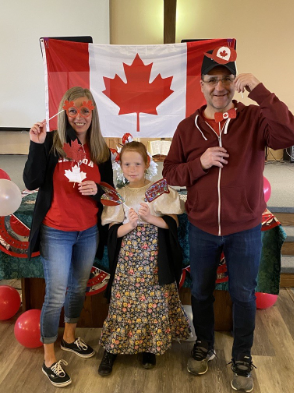
We are a unique people, a bilingual country with French and English as our official languages. We stretch from the Pacific Ocean over the Rocky Mountains, across the Prairies, past countless lakes and islands, all the way to the Atlantic Ocean. From sea to sea, we are Canadian.
A Short History of Homeschooling in Canada
The modern homeschool movement in Canada took root in the 1970s and 1980s. Those early families faced real resistance, and some even had children removed from their homes. I am so grateful for the support of the Home School Legal Defense Association (HSLDA) in those early years, and for the founding of the Home School Legal Defence Association of Canada in 1991. Their work helped secure the freedom Canadian families enjoy today.
Our own homeschool journey began in 1993, when we brought our two eldest daughters home for their education. We loved having our three girls home with us, learning and growing together. Several years later, four more children joined our family. Continuing to homeschool was an easy decision. The method was up for discussion.
Why Our Family Chose Classical Conversations
We had already said yes to home education. Then came a timely invitation to an information meeting about a new program coming to our city: Classical Conversations.
Honestly, I had no idea what I was getting us into by saying yes. What I did recognize was the Lord’s leading in it all.
Looking Ahead to Finish Strong
I loved the choices we had made for our older daughters, and as I looked ahead to teaching four more children, one thought stayed with me. I had watched larger families grow weary with their last couple of children, running low on the energy they once had. I wanted to finish strong. We had been searching for a way to learn together more cohesively, something that would carry us all the way to the end of this adventure.
Classical Conversations came along at just the right time. In the early years, we worked on Foundations memory work at home with songs and games. We parsed and diagrammed sentences with little ones underfoot. It was working. We had a strong academic program, and we had friends. The consistency and positive peer pressure were just what we needed.
The Fruit of Saying Yes
Continuing to say yes has led us on an interesting journey. We have graduated three more children from Classical Conversations, and our “baby” is now in Challenge II.
All these years later, I am blessed beyond measure by the fruit we see in our children, who are now adults. They are kind, generous, and well spoken, able to defend their faith in beautiful ways. Our younger daughters have been asked to speak at church, on mission trips, and in small groups. It is humbling for us as parents. We now sit on the sidelines, cheering and watching as these beautiful young people serve God and others.
What Makes Classical Conversations Canada Uniquely Canadian?
Canadian families have the blessing of our own Canadian history sentences and Canadian geography in Foundations Cycle 3. We continue with the same pedagogy and vision as Classical Conversations families around the world while enjoying the unique history of our own country.
- Canadian history (24 weeks): from Indigenous peoples to the patriation of the Constitution in 1982, when Canada gained full sovereignty.
- Canadian geography (24 weeks): every province and territory with its capital, plus bodies of water, rivers, mountains, and more.
- Challenge B: in the Debate strand, students dig into current events relating to Canada.
- Challenge I: students study American founding documents and compare them with Canada’s own founding documents.
These are beautiful foundations for families who want to dig deeper into Canadian history. When a young student names the rivers that cross the Prairies or the capital of Nunavut, she is practicing the classical habit of naming what God has made, and wonder follows close behind.
How Classical Conversations Canada Has Grown
Classical Conversations planted its first community outside the United States in Mississauga, Ontario, in 2005. The years since have brought remarkable growth.
| Academic Year | Communities | Students |
| 2012/13 | 5 | 88 |
| 2025/26 | 53 | About 2,000 |
Why the growth? Strong communities begin with people who care. They care about their families and about others. They care about homeschool freedom. They care about raising healthy, productive, God-fearing young people who will impact the world.
Visiting Communities Across the Country
I live in Alberta, and I have the incredible blessing of visiting many communities across Canada. I have listened to students in Ottawa, Ontario, sing the timeline song together. I have watched little ones in Edmonton practice their presentations for the first time. I have joined several communities as they celebrated graduation ceremonies for their Challenge IV students. These young people are the future leaders of Canada!
Each province sets its own homeschool requirements, so homeschooling in Ontario looks a little different on paper from homeschooling in Alberta. In every community I visit, I see the same joy of families learning side by side.
A Story That Changed My World
There are too many faith-filled testimonies to share them all, though one stands out. A young girl developed a serious heart condition, and her family had to fly back and forth to another city for surgery and treatment. Her Classical Conversations community rallied together in a way I had never seen: prayer, meal trains, and gifts. So much love and support. It changed my world!
To Know God and to Make Him Known
To know God and to make Him known. This motto rings true in every Classical Conversations community I visit. Each of us is at a different point in our faith journey, and Classical Conversations Canada communities offer a welcoming, safe place for encouragement and mentoring.
Canadians are an independent people, and each week we choose to come together in Classical Conversations communities. We share our strengths and support one another’s weaknesses. We bring varying dreams, ideals, and perspectives. We join others in following the God-given responsibility to home educate the next generation, raising up young people who love the Lord and love one another.
Frequently Asked Questions About Homeschooling in Canada
Is homeschooling legal in Canada?
Yes. Homeschooling is legal in every province and territory in Canada. Each province and territory sets its own requirements, which may include notifying a local school board or registering with the provincial education ministry. HSLDA Canada keeps province-by-province guidance, and your provincial education ministry is the best source for current rules.
How does homeschooling work in Canada?
Parents direct their children’s education at home while following their province’s requirements. Many families join a homeschool group for support and friendship. In Classical Conversations, parents teach at home throughout the week and gather with their local community once a week for Community Day.
What is Classical Conversations Canada?
Classical Conversations Canada brings Classical Conversations, a Christ-centered classical homeschool program, to families across the country. In the 2025/26 academic year, it included 53 communities and about 2,000 students, with Canadian history and geography in Foundations Cycle 3.
Can you do Classical Conversations at home?
Yes. Parents are their children’s primary educators, so most learning happens at home. Families review memory work with songs and games during the week, and the weekly community day adds friendship, accountability, and practice with presentations.
Is Classical Conversations a Christian program?
Yes. Classical Conversations is Christ-centered, and its mission is to know God and to make Him known. Every subject is studied as a way to know God’s world and point back to Him. Communities welcome families at every point in their faith journey.
Does Classical Conversations teach Canadian history?
Yes. Canadian communities use Canadian history sentences and Canadian geography during Foundations Cycle 3. The 24 weeks of history cover Indigenous peoples through the patriation of the Constitution in 1982, and Challenge I students compare American founding documents with Canada’s own.
What ages does Classical Conversations serve?
Classical Conversations walks alongside families from young learners in Foundations, through Essentials, and on through Challenge A to Challenge IV, which carries students through high school. Many Canadian communities now celebrate their own Challenge IV graduation ceremonies.

From Sea to Sea, for the Next Generation
Psalm 72 looks toward a reign that reaches from sea to sea, and every week in Canada, I see families living out a small part of that hope. Children learn the names of rivers and provinces. Teenagers study the documents that shaped two nations. Young adults step into churches, mission fields, and small groups, ready to speak with grace and conviction. The knowledge they gain, the understanding they build, and the wisdom they grow into all point back to the One who made this land from sea to sea.
That is the legacy I pray for every Canadian family. Knowing God. Making Him known.
To hear more of my family’s story, listen to my conversation on the Global Homeschool Minute podcast. Ready to see it for yourself? Find a Classical Conversations community near you in Canada.
Interested in more stories about CC around the world? Dive in with these resources:
- Classical Education in India: A Growing Movement Among Homeschool Families
- Classical Conversations International: Building a Global Homeschool Community in Taiwan
- From Homeschool Hesitation to Classical Education: A South African Mother’s Journey
Written by: