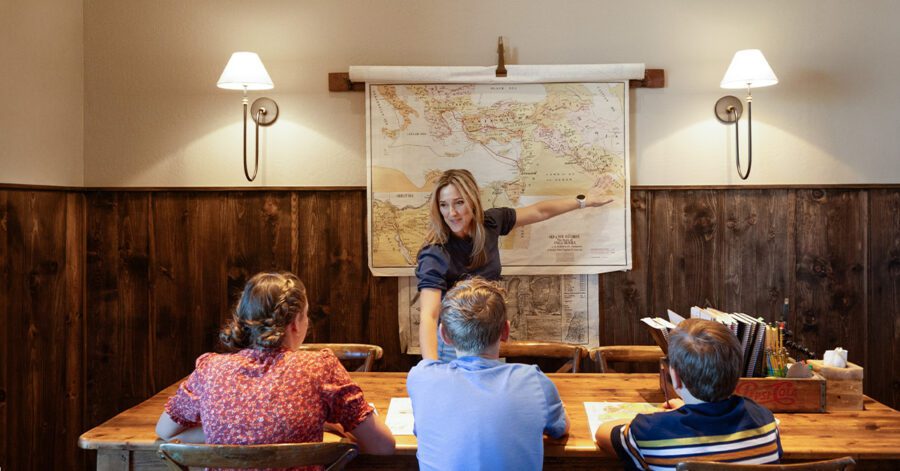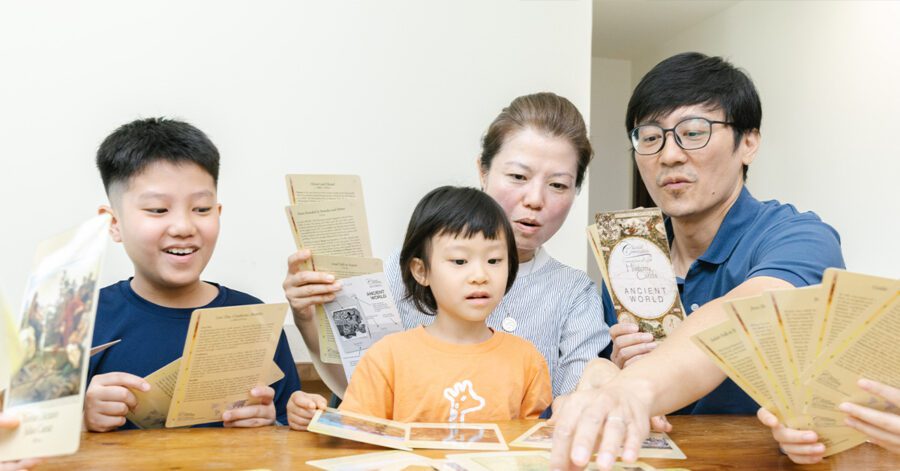

Homeschool myths spread faster than the truth about home education. Families who have built thriving academic environments at home, many of them through the Classical Conversations community, face the same questions year after year: about socialization, college readiness, cost, and whether parents are qualified to teach.
This article addresses the six most common misconceptions, drawing on research, experience, and the evidence of thousands of families who chose a different path. The myths are persistent. The answers are better.
Why Homeschooling Myths Persist
Homeschooling families often encounter the same skepticism. It comes from well-meaning friends and relatives who attended traditional schools their entire lives, and from a culture that treats institutional education as the standard against which all other choices are measured.
Part of the problem is that public perception lags behind the research. Studies on home education have grown substantially over the past two decades, but popular assumptions often still draw on images from an earlier era: isolated children who are academically underprepared and socially awkward. That image was never fully accurate, and it is increasingly obsolete.
What follows is a direct look at the six myths families encounter most often, and the evidence that answers them.
Myth #1: Homeschooled Kids Are Not Socialized
Myth: Homeschool students stay home all day and lack meaningful interaction with peers.
Reality: Flexibility in learning locations is one of the defining features of home education, and most families use that flexibility to build richer social environments, not smaller ones.
Homeschool students regularly participate in co-ops, including Classical Conversations (CC) communities, local sports leagues, fine arts programs, volunteer organizations, scouting groups, and special interest clubs. Many families structure their week around community-based learning, with formal lessons at home supplemented by regular gatherings with other homeschooling families.
CC communities, for example, meet weekly throughout the academic year, giving students consistent peer relationships, group memory work, and structured discussion led by trained Tutors. The socialization built into that model is intentional.
It is also worth distinguishing socialization from proximity. A child who spends six hours a day with the same thirty peers practices a narrow range of relational skills. Homeschooled students frequently interact with people of varying ages and backgrounds, developing a broader and more flexible set of social competencies.
Not all homeschooling is schooling at home. And not all socialization happens in a classroom.
Listen to Robert Bortins discuss But What About Socialization? on the Refining Rhetoric podcast
Myth #2: Parents Are Not Qualified to Teach
Myth: Teaching requires a certification. Parents do not have one.
Reality: Parents are their children’s first and best teachers, and have been from the beginning. Language acquisition, early mathematics, moral formation, and basic reasoning are all shaped by parents long before any curriculum enters the picture.
That foundation does not disappear when formal academics begin. What changes is the scope, and that is where curriculum, structure, and community come in.
No state in the United States requires parents to hold a teaching certification to homeschool their children.¹ Requirements vary by state, but the legal landscape broadly supports parental authority over education. And practically speaking, parents who use a well-designed classical curriculum are not being asked to invent the lessons themselves. They are guiding their children through a coherent body of knowledge, with support from trained Tutors, co-op communities, and experienced homeschooling families.
The Classical Conversations model is designed with exactly this in mind. The program provides the roadmap. The parent walks alongside.
You are your child’s first teacher. You are more prepared than you think.
Myth #3: Homeschooling Is Only for Religious Families
Myth: Homeschooling is a religious choice, not an educational one.
Reality: Faith is a significant motivator for many homeschooling families, and there is no reason to minimize that. Organizations like Classical Conversations are explicitly classical and Christian, and families who share those convictions often find that homeschooling is the most coherent expression of their educational philosophy.
But the homeschooling community is broader than any single motivation. Families choose home education for reasons that include academic enrichment, learning differences, professional travel, athletic training, medical considerations, dissatisfaction with local school options, and a desire for greater scheduling flexibility. The fastest-growing segments of the homeschool population include families who identify no religious motivation at all.
The decision to homeschool is, at its core, an educational decision. The values a family brings to that decision are their own. What the research shows is that families from across the spectrum of belief, background, and motivation are finding that home education works.
Myth #4: Homeschooled Kids Cannot Get Into College
Myth: Without a traditional transcript, homeschooled students cannot compete in college admissions.
Reality: The evidence says otherwise.
According to Brian Ray of the National Home Education Research Institute, studies show that homeschooled students, compared to their traditionally schooled peers, demonstrate increased social, emotional, and psychological development and attain greater relative success as adults.² Separately, NHERI’s research summary confirms that homeschooled students go to college and succeed at rates equal to or higher than the general population.
Many colleges actively recruit homeschool graduates for their academic preparation, self-motivation, and maturity. Transcripts, portfolios, standardized test scores, and dual enrollment credits can all document achievement in ways admissions offices readily recognize and accept.
Classical Conversations Challenge programs are designed with college preparation in mind. Students complete independent research papers, formal presentations, formal logic, and advanced mathematics, building both the competencies and the documentation required by college admissions.
See the results from our Classical Conversations Student Profile 2025 to see how students performed and their college goals.
Read Can Homeschoolers Go to College? Short Answer: YES!
Myth #5: Homeschooling Is Too Expensive
Myth: Homeschooling requires purchasing expensive curriculum, and most families cannot afford it.
Reality: Leigh Bortins, founder of Classical Conversations, has a direct answer to this concern: you probably have more than you think.
Many of the best educational resources available to homeschooling families are free. Nature is one of the most underused classrooms available. Watching birds, studying trees, observing the sky, and exploring creation together costs nothing and builds the habits of attention and wonder that sit at the heart of a classical education.
The library is equally accessible. Leigh recommends anchoring the homeschool day in a daily reading rhythm: one hour of family read-aloud and one hour of independent reading, a practice that requires no curriculum purchase and opens the door to deep learning at any income level. Books, she notes, let children stand on the shoulders of great thinkers, and they are always available.
The internet adds another layer of free and low-cost support. Classical Conversations maintains a YouTube channel with instructional content, and podcasts like Refining Rhetoric and Everyday Educator offer practical guidance from CC families at no added cost. Enrolled families also have access to the CC Connected Learning Center, which provides thousands of online resources alongside the curriculum.
For families who want a structured, community-based approach, Classical Conversations offers programs that meet students at every age and stage of their academic journey, including:
These programs reflect membership in a community that is designed to carry the weight of homeschooling alongside you.
Read: Top 3 Homeschool Questions Answered by Leigh Bortins
The question is not whether homeschooling is affordable. The question is which approach fits your family’s resources, goals, and season of life.
Myth #6: Homeschooling Is Isolating for Parents
Myth: Homeschooling places the entire educational burden on one parent alone.
Reality: The isolation concern is one of the most honest ones on this list.
Solo homeschooling, without community or outside support, is genuinely demanding. Parents who attempt to teach every subject, manage every assignment, and sustain their household’s motivation without outside connection do report burnout. That experience is real.
But isolation is not an inherent feature of homeschooling. It is a feature of doing it alone.
Classical Conversation communities exist precisely to diminish isolation. When families join a Classical Conversations community, they are not just receiving curriculum support. They are joining a network of parents who show up every week, share life’s joys and struggles, and understand the experience firsthand. Directors and Tutors within CC communities provide structure, accountability, and the kind of encouragement that carries families through the difficult stretches of the academic year.
The answer to isolation is not institutional school. It is community. And in the homeschooling world, community is something families build on purpose.
Discover The Power of Community, It’s Not What You Think
The Truth About Homeschooling
The myths about homeschooling are stubborn, but so are the facts. Research consistently shows that homeschooled students perform at or above their traditionally schooled peers academically. But they also build strong social skills through intentional community involvement, and succeed in college and adult life at rates that put the skeptics to rest.
What research cannot fully capture, but what thousands of homeschooling families will tell you, is what it is like to watch a child learn at a pace that fits their mind, in a context shaped by your values, alongside people who share your commitment.
For more research and statistics on home education, the National Home Education Research Institute maintains a comprehensive body of resources at nheri.org.
If you are considering homeschooling, look at the evidence, not the myths. You can do this, and there is a community ready to do it with you.
Download your free Homeschool Myths Printable:


Frequently Asked Questions About Homeschooling
Are homeschooled kids socialized?
Yes. Homeschooled children typically participate in co-ops, such as CC communities, sports leagues, and group activities that provide regular interaction with peers and adults of varying ages. Programs like Classical Conversations build weekly community structure specifically designed to support both academic growth and social development.
Can homeschooled students get into college?
Yes. Homeschooled students are admitted to colleges and universities at rates comparable to traditionally schooled students, and many colleges actively recruit homeschool graduates for their preparation and self-motivation. Transcripts, portfolios, and standardized test scores all document academic achievement in formats admissions offices recognize.
Do you have to be a certified teacher to homeschool?
No. No state in the United States requires parents to hold a teaching certification to homeschool their children, but some many require a high school diploma. Requirements vary by state, but structured programs and curriculum resources make home education accessible to parents.
Is homeschooling expensive?
It can be, but it does not have to be. Costs vary based on personal family preference. Most homeschooling families spend less per year than the cost of private school tuition while retaining complete authority over their child’s education.
Debunk more homeschool myths with these helpful resources:
- Classical vs. Modern Education
- Classical Education Myth #1: It’s Just Rote Memorization (Here’s The Truth)
- Classical Education Myth #2: Why Learn Latin? The Truth Behind Classical Education’s “Dead Language”
¹ HSLDA, hslda.org/legal
² Brian D. Ray, “A Systematic Review of the Empirical Research on Selected Aspects of Homeschooling as a School Choice,” Journal of School Choice, November 27, 2017, https://www.tandfonline.com/doi/full/10.1080/15582159.2017.1395638
“Research Facts on Homeschooling,” National Home Education Research Institute, September 9, 2021, https://www.nheri.org/research-facts-on-homeschooling/