Classical Conversations Capstone Events: A Parent FAQ
Every level of Classical Conversations, from Foundations through Challenge IV, ends its year with a capstone event. Here is what that means, why it matters, how the events connect to each other, and what each one actually looks like.
What is a capstone event at Classical Conversations?
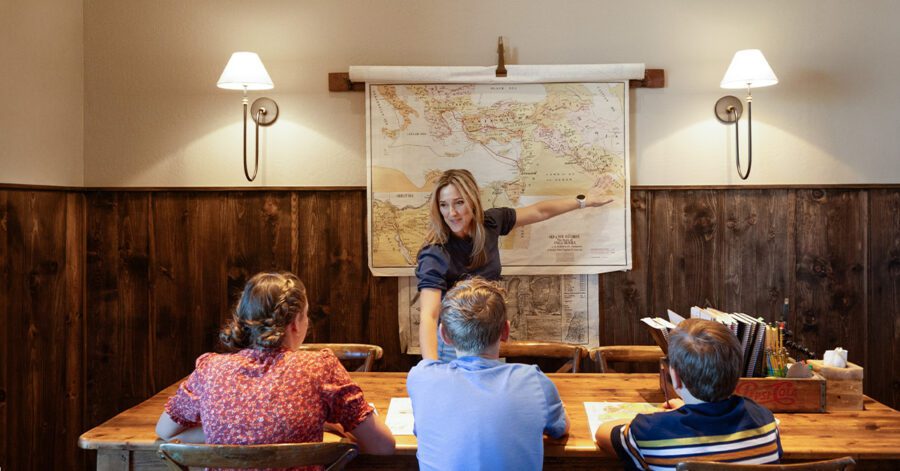
A capstone event is the project, presentation, or milestone that closes out a program year at Classical Conversations. It is the moment a student takes everything practiced that year, whether that is a year of memory work, a research paper, or a debate case, and puts it in front of real people. Parents, Tutors, Directors, and often the whole community are there to see it.
Foundations, Essentials, and every level of Challenge each have their own capstone event, suited to that age and that year’s focus.
Why do capstone events matter?
Capstone events matter because they give a student a real audience to showcase their skills. Presenting research, arguing a case, or reciting a full year of memory work out loud asks a student to actually own what they have learned instead of just recognizing it on a quiz.
They also build genuine confidence in public speaking and communication, a skill every student is quietly training toward. A student who has already stood in front of family and community at Science Fair or Mock Trial is far better prepared for a college interview or a presentation years later.
Capstone events also turn the school year into a shared milestone for the whole community, not just the student. Parents, Tutors, and Directors all invest in getting a student to presentation day, and celebrating that day together is part of what makes a CC community feel like a community.
How do the capstone events work together?
The capstone events are not eight unrelated assignments. Each one builds on the skills practiced in the one before it, so a student’s whole CC career works like one long rehearsal for confident, public communication.
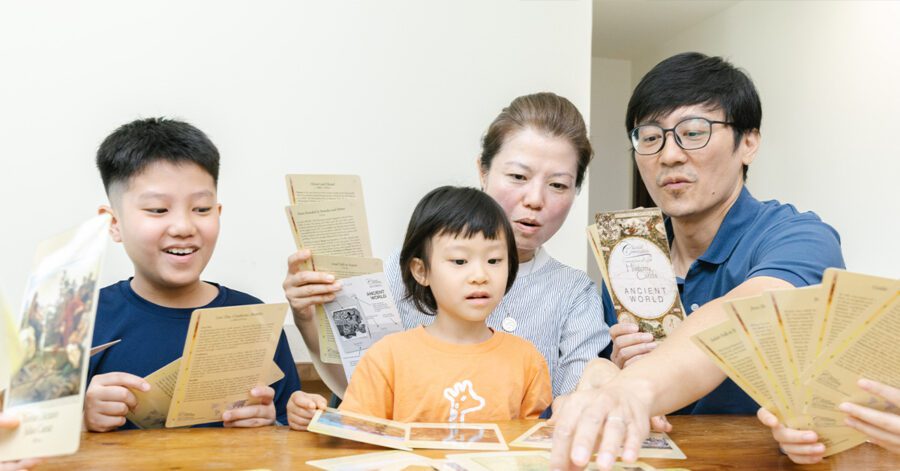
It starts with memorization in Foundations, where Memory Master proves a student can hold a large body of information in their head for the long term. Essentials students research a historical character, craft a five paragraph paper, and deliver a presentation in costume for the Faces of History event.
Challenge A’s Science Fair adds the scientific method to that same research and presentation skill. Challenge B’s Mock Trial raises the stakes again, asking students to argue a real case in front of an actual judge. Challenge I’s debate strand points that same argumentation skill at government and economic policy instead of a courtroom case.
By Challenge II and III, the focus shifts toward culture and expression. Protocol asks students to engage thoughtfully with music and art, and Poetry Cafe gives them a low stakes stage to share their own writing. Challenge IV’s Senior Thesis pulls every one of those skills, research, writing, argument, and delivery, together into one final paper and defense, celebrated at National Commencement.
Seen this way, every capstone event is practice for the next one.
What are the capstone events at Classical Conversations?
Here is each one, program by program.
Foundations: Memory Master
Memory Master is the recognition given to Foundations students, ages 4 and up, who memorize 100 percent of that year’s memory work. That includes the full history timeline, math facts, Latin, English grammar, and science content, recited in full to a parent, tutor, and director. Unlike the other capstones, it is not a single presentation day. Becoming a Memory Master involves a year of practice followed by several rounds of proofing by parents and Directors.
Not every Foundations student pursues Memory Master. It’s geared toward older students who have practiced the skill of memorization for several years. It is an optional achievement, not a required assignment. Students who do earn it can go on to compete at CC’s National Memory Master competition.
Read more: How to Become a Memory Master and National Memory Master Competition
Essentials: Faces of History
Faces of History is a research paper and oral presentation that culminates each year of the Essentials program, ages 9 to 12. Students choose a historical figure, research and write a five paragraph paper, then present it in costume, often speaking in the first person as that character.
Families gather in community to watch, making it as much a celebration as an assignment. Students spend the year building toward this single presentation, practicing sourcing, writing, and public speaking along the way.
Read more: Faces of History: Peace, Process, and Play!
Challenge A: Science Fair
Challenge A students, roughly age 12, spend their second semester on Science Fair, applying the scientific method to a self chosen experiment. Students design and run the experiment, write it up as a research paper, and present their findings to their community.
The skill of research is studied in Essentials through history and in Challenge A through various science topics. Same idea of a full year building toward one public presentation, just with a lab notebook instead of a costume.
Read more: Your Guide to a Successful Homeschool Science Fair
Challenge B: Mock Trial
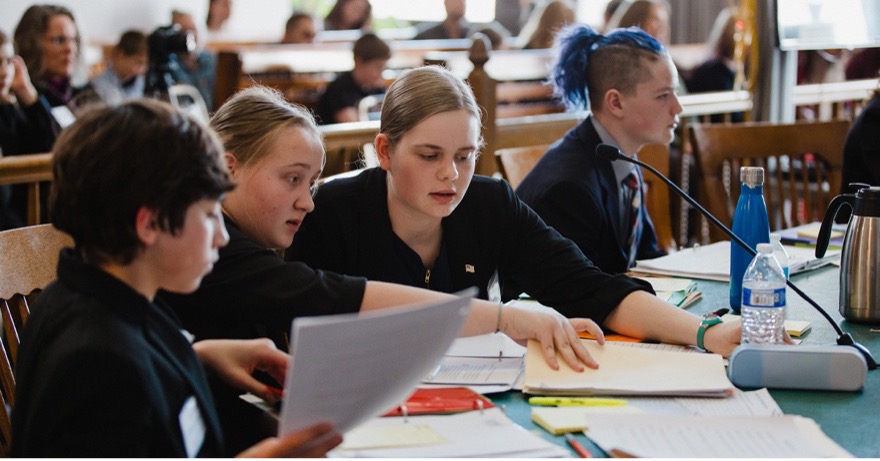
Mock Trial is the capstone for Challenge B students, around ages 13 to 14. Students spend the spring semester preparing the assigned court case, then argue it in front of an actual judge, often a volunteer local attorney, inside a county courthouse. Every April, Challenge B students across CC head to court together.
Students take on roles like attorney and witness for the prosecution or defense, while adult volunteers typically fill the judge and jury seats. It is a hands on “final exam” (it is their Blue Book for spring, but we don’t give final exams) for the logic, research, and rhetoric skills Challenge B builds all year.
Read more: I Survived Mock Trial
Challenge I: Debate
Debate is one of two formal debate projects in Challenge I’s debate strand, ages 14 and up. Students split into teams and spend a semester researching and arguing a real public policy question, then debate it in front of their community, building a case using the same skills they have learned through persuasive writing essays.
Challenge I’s debates are similar to Challenge B’s Mock Trial with the same idea of researching, arguing, and defending a position in front of real people, but the subject is government and economics instead of a courtroom case.
Read more: 14 Benefits of a Homeschool Debate Curriculum and What Is Challenge I?
Challenge II: Protocol
Protocol caps off Challenge II, the year students study classical music and art. Communities attend a play, symphony, or opera together, often preceded by an etiquette lesson covering formal table settings and basic social graces.
The goal is not just culture for culture’s sake. It is giving students practice engaging with and discussing topic outside of their regular interest, a skill Protocol treats as seriously as any academic one. Students often enjoy dressing up for this elegant outing, and parents are encouraged to participate, too.
Read more: Protocol
Challenge III: Poetry Cafe
Poetry Cafe is an optional, end of semester event for Challenge III students, ages 16 and up, who spend the year studying Shakespeare and writing their own poetry. Students read their original poems aloud to their community, often over coffee and dessert, as a chance to practice Delivery, the last of the Five Canons of Rhetoric.
Poetry Cafe is an encouraged event that allows students to share their unique forms of expression in a safe and affirming space. It is up to each local community and Director whether to host one. Communities that do often open it up to the whole CC family, not just Challenge III.
Read more: Host a Poetry Cafe in Your Local Community!
Challenge IV: Senior Thesis and National Commencement
Challenge IV, the final year of the program, ends in two milestones. First, the Senior Thesis: students choose an academic topic, write a substantial persuasive paper pulling together ideas from across their Challenge years, then present and defend it before a panel of judges, along with family, friends, and their community.
Then comes National Commencement, CC’s national graduation ceremony held alongside National Conference, National Memory Master, and National Number Knockout. It is a chance for graduating seniors and their families to celebrate the finish line together with students from across the country, not just their local community.
Read more: Why the Senior Thesis? and National Commencement 2025
Frequently Asked Questions
Do all CC programs have a capstone event?
Yes. Every level from Foundations through Challenge IV builds toward one culminating project or presentation, though the format changes by age and subject focus. The capstone events range from earning Memory Master in Foundations to a courtroom trial in Challenge B to a defended thesis in Challenge IV.
Do parents attend capstone events?
Yes! Capstone events are meant to be celebrations of learning for students and parents. Faces of History, Science Fair, Mock Trial, Debate, Protocol, Poetry Cafe, and National Commencement are all designed as community events. Families often help organize or judge these events.
How are capstone events assessed?
Parents in Classical Conversations remain the teachers and give ultimate assessment on student work. For many of these events, students also receive feedback from judges (science fair, Mock Trial, and Senior Thesis) and from tutors. Students in Challenge IV may choose to participate in Concurrent Enrollment for their senior thesis and will then receive feedback from the course instructor.
What if my student is nervous about presenting?
That is normal, and it is part of the point. Each capstone builds on skills practiced all year, so by the time students present, they have already done smaller versions of the same task. Directors and experienced CC parents are usually glad to share tips specific to each event.
How much does a capstone event cost?
Costs vary by community and event. Mock Trial may involve courthouse or costume expenses, while National Commencement has its own registration fee since it is a standalone national event. Check with your local director or CC’s National Commencement page for current details.
The Bottom Line on Capstone Events
Capstone events are where a year of Classical Conversations stops being coursework and becomes something a student owns. A Foundations student reciting a full year of memory work, a Challenge B student answering a real judge’s question, a Challenge IV senior defending a thesis before a panel: each one is the same skill at a higher level, and each one is practice for the next.
So if your student is staring down their first Faces of History paper or their first Science Fair board, know that the nerves are part of the design. Every capstone is built on a year of smaller reps, and every CC family before yours has stood in that same room. Ask your Director what their community’s presentation day looks like, then mark it on the calendar as the celebration it is.
Keep Reading
- Why the Senior Thesis? and Lessons from the Finish Line: Top Tips for Senior Thesis Success
- Training Voices for Truth: Why Presentations Matter in Foundations
- What Are the Five Canons of Rhetoric?
- Growing Deep Roots for Speaking and Writing
- I Survived Mock Trial
Keep Listening
Our Everyday Educator podcast has walked parents through nearly every capstone on this list:
- Mock Trial, Challenge B’s Capstone and Mock Trial: What’s the Big Deal?
- How to Prepare for the CC Senior Thesis: A Parent’s Guide
- Family Learning: Science Fair for Everyone
- The Finer Things in Life: Protocol
Browse the full library at classicalconversations.com/podcasts, or find a community near you to see a capstone event in person.